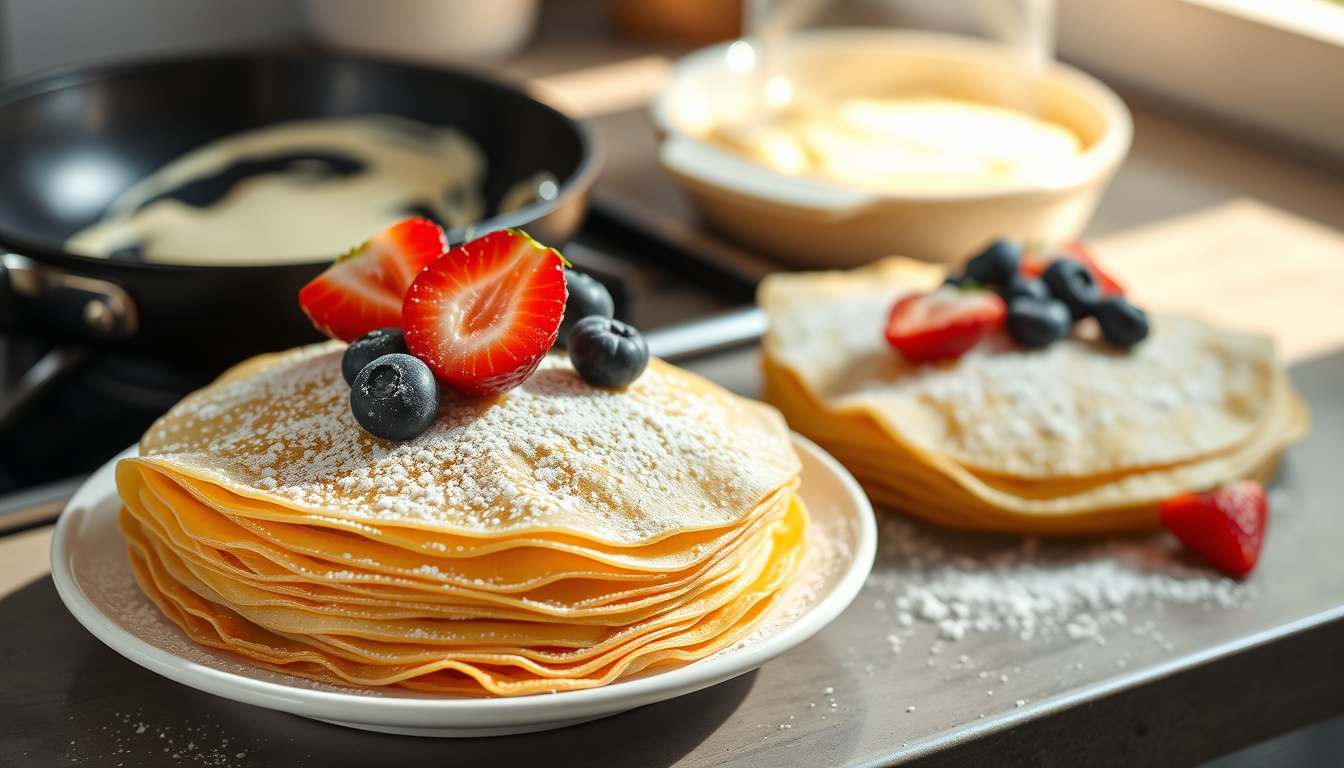
Crepes are thin French pancakes that originate from the Brittany region. Unlike American pancakes, crepes contain no baking powder and are rolled or folded around sweet or savory fillings. The technique requires a delicate batter and some practice with tilting the pan, but the results are versatile and impressive.
Making crepes at home is simpler than many assume. With basic pantry ingredients and a nonstick skillet, anyone can achieve restaurant-quality results. The key lies in getting the batter consistency right and mastering the quick spreading motion that creates those characteristic thin, lacy edges.
How to Make Crepe Batter from Scratch
The foundation of great crepes starts with a simple batter made from everyday kitchen staples. Traditional recipes call for flour, eggs, milk, butter, sugar, and salt blended until completely smooth. This basic combination yields crepes that are tender yet strong enough to fold without tearing.
Prep Time
10 mins + rest
Cook Time
20 mins
Servings
12 crepes
Difficulty
Easy
Key Ingredients and Substitutes
The classic batter for 12 to 16 crepes uses 4 large eggs, 1¾ cups whole milk, 1 cup all-purpose flour, 2 tablespoons sugar, ½ teaspoon salt, and ¼ cup melted butter. Some recipes substitute part of the milk with water for a lighter texture. For those without a blender, whisking vigorously by hand works well when flour is added gradually to avoid lumps.
- Rest batter 30 minutes covered for tender crepes with relaxed gluten
- Low to medium heat prevents tearing and ensures even cooking
- Nonstick spray or minimal butter keeps crepes from sticking
- Use sifted flour for a smoother batter consistency
- Cool melted butter before adding to eggs to prevent scrambling
- Blend or whisk until completely lump-free for thin, delicate results
| Ingredient | Measurement |
|---|---|
| All-purpose flour | 1 cup (sifted) |
| Large eggs | 4 |
| Whole milk | 1¾ cups |
| Melted butter | ¼ cup |
| Sugar | 2 tbsp |
| Kosher salt | ½ tsp |
How Thin Should Crepe Batter Be?
The ideal consistency resembles heavy cream or pancake batter that has been thinned slightly. It should pour easily but still coat the back of a spoon. According to cooking experts, adding extra milk if the batter seems thick produces better results. Using only 3 tablespoons of batter per crepe ensures thin, crispy edges without the risk of tearing.
Step-by-Step Guide to Cooking Perfect Crepes
Once the batter is ready, the cooking process moves quickly. Each crepe takes only about 2 minutes total. Heating the pan properly and working efficiently with the batter determines whether the results are delicate and golden or thick and underdone.
Heating Your Pan
A 9 to 10-inch nonstick skillet or crepe pan works best over medium heat. Lightly grease the surface with butter, oil, or baking spray before the first crepe. Allow the pan to preheat adequately so the batter sizzles immediately upon contact. Well-heated cookware prevents sticking and promotes even browning.
Pouring and Spreading the Batter
Add approximately ¼ cup of batter to the center of the hot pan. Immediately lift the pan and tilt it in a circular motion, allowing gravity and centrifugal force to spread the batter thinly to the edges. The motion must be quick and confident. Using less batter than you think necessary produces thinner, more delicate results.
How to Flip Crepes
After 1 to 2 minutes, the edges will begin to lift and the bottom will appear set with golden spots. A thin spatula works well for loosening the edges before flipping. Slide the spatula under the center and gently turn the crepe over. Cook the second side for only 30 to 60 seconds until lightly browned. Stack completed crepes on a plate to stay warm.
Can You Make Crepes in a Regular Pan?
Yes. Any flat-bottomed skillet works, though a nonstick surface makes a significant difference. A regular pan requires more grease and careful attention to heat levels. Electric crepe makers provide consistent results for those making large batches, but they are not necessary for beginners learning the technique.
Tips and Tricks for the Best Crepes
Even experienced cooks encounter challenges with crepes. Understanding the science behind the technique helps troubleshoot problems as they arise. Several key principles distinguish successful crepes from torn or rubbery ones.
While some recipes skip resting the batter for a quick version, allowing the batter to rest for 30 to 120 minutes covered at room temperature improves the final texture. Resting relaxes gluten strands, resulting in more tender crepes that are easier to work with.
What Makes Crepes Crispy?
Warm melted butter incorporated into the batter creates crispier edges. Cooking over medium heat rather than high heat allows the crepe to set slowly and develop golden color without burning. Using slightly less batter per crepe produces thinner results that crisp up nicely. Multiple factors contribute to the ideal texture.
What Is the Trick to Making Good Crepes?
Practice with the tilting motion proves most valuable. Confidence and speed when spreading the batter prevent thick spots and ensure even coverage. Starting with a small amount of batter and adding more if needed reduces waste and frustration. Preheating the pan properly between each crepe maintains consistent results throughout the batch.
Troubleshooting Common Problems
| Problem | Solution |
|---|---|
| Lumpy batter | Blend or whisk thoroughly; sift flour first |
| Tearing or breaking | Use less batter, rest batter 30+ minutes |
| Too thick or heavy | Thin with milk or water; use 3 tbsp maximum |
| Sticking to pan | Use hotter pan, more grease, or better nonstick |
| Not crispy | Less batter, medium heat, butter in batter |
| Eggs scrambling | Cool melted butter before adding to eggs |
Crepe Filling Ideas and Variations
The beauty of crepes lies in their versatility. French tradition distinguishes between sweet crepes made with wheat flour and savory galettes made with buckwheat flour. Both styles accept a wide range of fillings.
Sweet Crepe Fillings
Classic sweet options include Nutella with sliced bananas, fresh berries with whipped cream, or a simple dusting of powdered sugar with lemon juice. A popular combination involves beating heavy cream to soft peaks and mixing it with powdered sugar, vanilla, and softened cream cheese for a rich filling. Food Network suggests experimenting with various sweet toppings to find personal favorites.
Savory Crepe Fillings
Savory variations often feature ham and cheese, sautéed spinach with mushrooms, or scrambled eggs with bacon. Smoked salmon with cream cheese makes an elegant dinner option. For savory crepes, omit sugar from the batter and consider adding fresh herbs or finely diced onions to the mixture.
How to Fold Crepes
Crepes are typically filled after cooking rather than during. Spread filling across one half of the crepe, then fold it in half to create a semi-circle. Folding again into quarters produces triangular shapes that showcase the filling beautifully. Rolling works well for fillings that might leak.
Make-Ahead and Storage Tips for Crepes
Crepes and their batter both store well, making them practical for entertaining or meal prep. Planning ahead reduces stress when serving brunch or dinner to guests.
Storing Cooked Crepes
Stack cooled crepes with parchment paper between each one to prevent sticking. Place them in an airtight container and refrigerate for up to 3 days. Reheat crepes in a dry skillet over medium heat for about 30 seconds per side, or microwave for 15 to 20 seconds for a softer result.
Freezing Crepes
Crepes freeze exceptionally well for up to 1 month. Layer them with parchment in a freezer bag, pressing out excess air. Thaw overnight in the refrigerator and reheat gently before serving. The texture holds up well after freezing when properly stored.
Preparing Batter in Advance
The batter can be made 1 to 2 days ahead and kept refrigerated in an airtight container. Whisk or blend briefly before using to restore an even consistency. Some batters, according to BBC Good Food, can last up to 48 hours in the refrigerator without compromising results.
Understanding Crepe Varieties and Traditions
Crepes hold a special place in French culinary heritage, particularly in the Brittany region where they originated. The distinction between sweet and savory varieties reflects regional preferences and practical considerations. Wheat flour crepes, made with white flour, sugar, and butter, serve as the base for dessert-style preparations. Buckwheat crepes, called galettes, traditionally accompany savory fillings and offer a nutty flavor with slightly more structure.
February 2nd marks La Chandeleur, or Crepe Day, in France. Legend holds that holding a coin in one hand while flipping a crepe in the pan brings good luck and prosperity for the coming year. While this tradition adds cultural charm, everyday crepe making requires no special occasions or equipment beyond a reliable skillet and basic ingredients.
Summary
Making crepes at home requires only flour, eggs, milk, butter, sugar, and salt blended into a smooth, thin batter. Cooking involves heating a nonstick pan, pouring a small amount of batter, and tilting quickly to spread it thin. Each crepe cooks for about 1 to 2 minutes per side, creating delicate pancakes that work equally well with sweet or savory fillings. The batter can rest for improved texture, and both batter and cooked crepes store well for several days. With minimal equipment and standard pantry ingredients, anyone can master this French technique with a little practice.
For those new to tracking information or using various tools effectively, understanding the fundamentals works similarly to mastering a recipe. How to Use a Flight Tracker – Complete Beginner’s Guide offers practical guidance on navigating different platforms with confidence.
Frequently Asked Questions
What is the difference between crepes and pancakes?
Crepes are much thinner than American pancakes and contain no baking powder. They rely on eggs and the cooking technique for their structure rather than chemical leavening.
How do you make crepes without a crepe pan?
Any 9 to 10-inch nonstick skillet works well. Electric griddles and regular frying pans also produce acceptable results with proper greasing and heat management.
How long do you cook crepes?
Each crepe cooks approximately 1 to 2 minutes on the first side until edges lift, then 30 to 60 seconds on the second side until lightly golden.
Can you make crepe batter ahead of time?
Yes, the batter keeps refrigerated in an airtight container for 1 to 2 days. Whisk or blend before using to restore the proper consistency.
What are the best sweet crepe fillings?
Popular options include Nutella with banana, whipped cream with berries, lemon and sugar, or cream cheese fillings. The choices are nearly endless based on personal preference.
Why do my crepes tear when flipping?
Tearing typically occurs when the batter is too thick or the pan is not hot enough. Using less batter, ensuring the pan is properly preheated, and resting the batter for 30 minutes all help prevent tearing.
How thin should crepe batter be?
The batter should pour like heavy cream or slightly thinner than typical pancake batter. If too thick, add milk or water gradually until reaching the desired consistency.
Can crepes be frozen?
Yes, cooked crepes freeze well for up to 1 month when stacked with parchment paper between each one and stored in an airtight freezer bag.

Jack Thomas Clarke Thompson is a staff writer for PopCultureDaily.co.uk, covering entertainment news, film, television, streaming and celebrity culture. He works under Editor-in-Chief Harriet Winslow and Managing Editor Lucas Bennett, following the newsroom standards for sourcing, verification and fact-checking set out in our editorial policies.