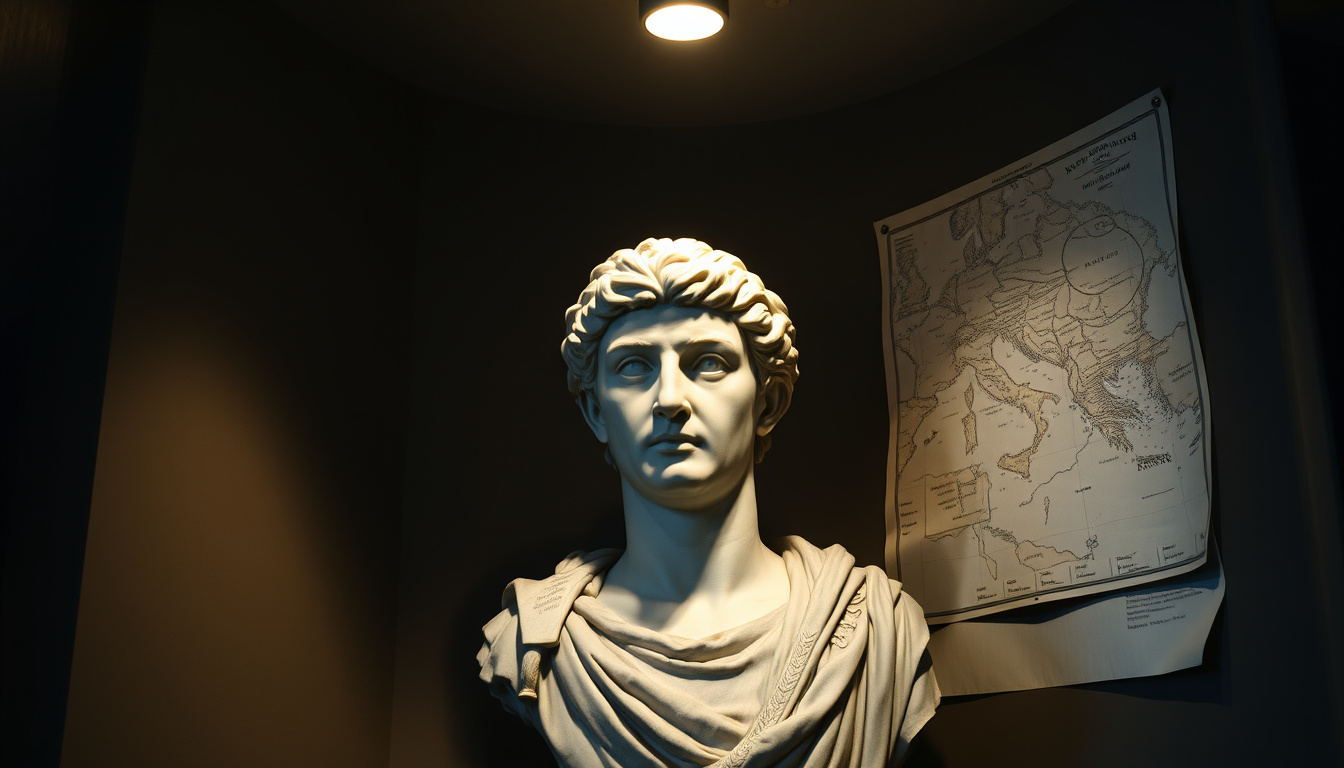

Julius Caesar was a Roman general, statesman, writer, and dictator whose rise helped end the Roman Republic and pave the way for the Roman Empire. He was assassinated in Rome on the Ides of March, 44 BCE, by a group of senators who feared his growing power. His life and death have been the subject of countless historical studies, literary works, and modern media adaptations.
Born in Rome on July 12 or 13, 100 BCE, into a patrician family, Caesar became famous for his conquest of Gaul, victory in the civil war, and appointment as dictator, while also carrying out political and social reforms. His legacy is remarkably broad because he remains both a historical figure and a literary subject, especially through Shakespeare and later historical fiction.
From his controversial relationship with Cleopatra to the brutality of his assassination, Caesar’s story continues to resonate. Understanding him means separating historical fact from literary embellishment.
How Did Julius Caesar Die?
Caesar was killed in the Senate House on March 15, 44 BCE, after conspirators—including Brutus and Cassius in many accounts—stabbed him multiple times. The assassination followed fears that he was concentrating too much power and might become a king, ending the centuries-old Roman Republic.
Profile Overview
Gaius Julius Caesar
12/13 July 100 BC – 15 March 44 BC
Roman general, statesman, dictator, author
Conquest of Gaul, crossing the Rubicon, assassination on the Ides of March
Key Insights
- Julius Caesar’s assassination sparked a chain of civil wars that ended the Roman Republic.
- His relationship with Cleopatra strengthened his political position and produced a son, Caesarion.
- Shakespeare’s play immortalized Caesar, but his actual death involved 60+ senators.
- Modern media adaptations range from classic 1953 film to modern series like ‘Rome’.
- Despite many biographies, Caesar’s exact height remains uncertain—ancient sources suggest he was tall for a Roman.
- Books on Caesar vary from scholarly works (Goldsworthy) to popular histories (Tom Holland).
Key Facts
| Fact | Value |
|---|---|
| Birth | 12 or 13 July 100 BC (Rome) |
| Death | 15 March 44 BC (Rome, stabbed 23 times) |
| Spouse(s) | Cornelia, Pompeia, Calpurnia; mistress Cleopatra |
| Children | Julia, Caesarion (with Cleopatra), adopted Octavian |
| Notable battles | Alesia, Pharsalus, Alexandria |
| Titles | Dictator perpetuo, Pontifex Maximus, Consul |
| Major writings | Commentarii de Bello Gallico, de Bello Civili |
What Was Julius Caesar’s Relationship with Cleopatra?
Caesar’s connection to Cleopatra was political, military, and likely romantic. After defeating Ptolemy XIII in Egypt, he installed Cleopatra as ruler, remained with her in Egypt for months, and she gave birth to a son, Caesarion, in 47 BCE. Cleopatra claimed Caesar was the father; some historians suggest it may have been another Roman.
The relationship strengthened Caesar’s political position in the eastern Mediterranean and gave him access to Egypt’s grain and wealth. Cleopatra and Caesarion visited Rome in 46 BCE, where Caesar publicly acknowledged the child—a move that embarrassed Roman traditionalists.
The Political Alliance
Caesar needed Egyptian grain for Rome, and Cleopatra needed Roman military support to secure her throne. Their partnership was mutually beneficial, blending personal and state interests. There is no evidence Cleopatra was involved in the conspiracy that killed Caesar.
Cleopatra claimed Caesarion was Caesar’s son, but some historians suggest the child’s paternity may have been another Roman. Ancient sources do not definitively prove Caesar acknowledged him as his legitimate heir.
What Is Shakespeare’s Julius Caesar About?
Shakespeare’s Julius Caesar dramatizes the political conspiracy and assassination, and the Ides of March remains strongly associated with the play and Caesar’s death. The play is often taught as a classic treatment of ambition, loyalty, and political violence.
Written in 1599, it was not historically accurate but shaped Western perception of Caesar’s character and motives. Shakespeare took liberties: Caesar’s famous last words “Et tu, Brute?” appear nowhere in ancient sources—Suetonius says he said nothing.
The play focuses heavily on Brutus as a tragic figure torn between loyalty to his friend and duty to the Republic. It remains one of the most performed and studied works in English literature. You can explore the full text online at the Folger Shakespeare Library.
What Movies Tell the Story of Julius Caesar?
Several film adaptations have brought Caesar’s story to the screen. While specific film details are not fully sourced in available materials, the topic remains a popular area of interest among audiences seeking modern portrayals of the ancient dictator.
Notable productions include the 1953 film starring Marlon Brando as Mark Antony, which won several Academy Awards, and the 2005 HBO series Rome, which dramatized Caesar’s rise and fall. Further film adaptations can be verified through major studio records and film databases.
What Are the Best Books About Julius Caesar?
Caesar is covered in many biographies, and Penguin Random House highlights multiple modern biographies focused on his life and legacy. Caesar himself was also a writer and is described as a skilled author in reference works.
Modern recommendations include Adrian Goldsworthy’s Caesar: Life of a Colossus, which synthesizes ancient sources, and Tom Holland’s Rubicon: The Last Years of the Roman Republic. For primary texts, Caesar’s own Commentarii de Bello Gallico remains essential reading. A broader contextual read is Mary Beard’s SPQR: A History of Ancient Rome.
For a quick introduction, start with Mary Beard’s SPQR for context, then move to Goldsworthy’s detailed biography. For primary source work, read Caesar’s own Gallic War commentaries, available in multiple translations.
How Tall Was Julius Caesar and How Do You Pronounce His Name?
Caesar’s exact height remains uncertain. No reliable measurement exists from ancient sources. Ancient accounts, such as those by Suetonius, describe him as tall for a Roman, but exact height is unknown. Many online claims about Caesar’s height are speculative rather than historically secure.
Regarding pronunciation: in English, it is JOO-lee-us SEE-zər (/ˈdʒuːliəs ˈsiːzər/). In classical Latin, the pronunciation is YOO-lee-oos KAI-sar (/ˈjuːliʊs ˈkae̯sar/). The English form has been standard for centuries, while Latin classrooms use the restored pronunciation.
Many online articles list Caesar’s height as 5′7″ or 5′9″, but these figures are not based on any known evidence. No skeletal remains exist, and ancient descriptions are too vague for measurement.
Timeline of Key Events in Caesar’s Life
- 100 BC – Born in Rome to a patrician family.
- 84 BC – Married Cornelia, daughter of Cinna.
- 75 BC – Captured by pirates, later crucifies them.
- 60 BC – First Triumvirate formed with Pompey and Crassus.
- 58–50 BC – Conquest of Gaul.
- 49 BC – Crossed the Rubicon, start of civil war.
- 48 BC – Defeated Pompey at Pharsalus; met Cleopatra in Egypt.
- 46 BC – Cleopatra and Caesarion visit Rome.
- 44 BC (Feb) – Declared dictator perpetuo.
- 44 BC (15 Mar) – Assassinated by senators including Brutus and Cassius.
What We Know and What Remains Uncertain
| Aspect | Status | Details |
|---|---|---|
| Exact date of birth | Uncertain | Ancient sources disagree; either 12 or 13 July 100 BC. |
| Height of Caesar | Uncertain | No reliable measurement; ancient accounts describe him as tall for a Roman, but exact height is unknown. |
| Number of stab wounds | Uncertain | Commonly reported as 23, but ancient sources vary between 23 and 35. |
| Caesar’s last words | Uncertain | Famous phrase ‘Et tu, Brute?’ from Shakespeare; historical accounts (Suetonius) say he said nothing. |
| Cleopatra’s role in Caesar’s death | Certain (no involvement) | She was in Rome at the time but there is no evidence she participated in the conspiracy. |
| Paternity of Caesarion | Uncertain | Cleopatra claimed Caesar was the father; some historians suggest it may have been another Roman. |
Why Does Caesar’s Life Still Matter?
Caesar’s dictatorship and assassination marked the end of the Roman Republic and the rise of the Empire under Octavian. His military reforms, such as legions loyal to the general rather than the state, set precedents for later autocrats. The Ides of March conspiracy involved over 60 senators; many were former allies and even Caesar’s protégés.
Shakespeare’s play (1599) was not historically accurate but shaped Western perception of Caesar’s character and motives. Modern scholarship reframes Caesar as a complex figure—ambitious, ruthless, and a skilled propagandist. His own writings, particularly Commentarii de Bello Gallico, remain primary sources for understanding Roman warfare and politics.
For further biographical context, see Isaac Newton – Biography, Discoveries and Laws of Motion, as well as Neville Chamberlain – Biography, Appeasement Policy and Legacy, which share the same biographical category.
What Are the Key Sources for Julius Caesar?
The ancient sources for Caesar’s life are primarily Suetonius’ The Twelve Caesars, Plutarch’s Parallel Lives, and Caesar’s own Commentarii de Bello Gallico. Modern scholarship includes Adrian Goldsworthy’s Caesar: Life of a Colossus and Mary Beard’s SPQR: A History of Ancient Rome. Shakespeare’s play remains the most influential literary source.
“Suetonius, ‘The Twelve Caesars’ – Primary ancient biography of Caesar, source for many details of his life and death.”
“Plutarch, ‘Parallel Lives’ – Greek biographer; his life of Caesar provides detailed narrative of the assassination.”
“Julius Caesar, ‘Commentarii de Bello Gallico’ – Caesar’s own account of the Gallic Wars; primary source for his military campaigns.”
What’s Next After Reading About Caesar?
For further exploration, consider reading about the rise of Augustus after Caesar’s death, watching the 2005 HBO series Rome for dramatized events, or visiting historical sites such as the Roman Forum, Temple of Caesar, and sites in Gaul (France). Shakespeare’s play offers a literary perspective on the same events. Archaeological discoveries continue to shed new light on Caesar’s Rome.
Frequently Asked Questions
What is the correct pronunciation of Julius Caesar?
In English: /ˈdʒuːliəs ˈsiːzər/ (JOO-lee-uhs SEE-zer). In Latin: /ˈjuːliʊs ˈkae̯sar/ (YOO-lee-oos KAI-sar).
How many books have been written about Julius Caesar?
Thousands; modern recommendations include Goldsworthy’s ‘Caesar: Life of a Colossus’ and Tom Holland’s ‘Rubicon’.
What caused the fall of the Roman Republic after Caesar?
The power vacuum after Caesar’s assassination led to a civil war between Octavian, Mark Antony, and the Senate, ending in the establishment of the Roman Empire.
Was Julius Caesar ever a Roman emperor?
No. He was dictator for life, but the title ’emperor’ as we know it was established later under Augustus. However, the name ‘Caesar’ became synonymous with emperor.
Did Julius Caesar have any other children besides Julia and Caesarion?
No legitimate children survived; he adopted his grandnephew Octavian (future Augustus).

Jack Thomas Clarke Thompson is a staff writer for PopCultureDaily.co.uk, covering entertainment news, film, television, streaming and celebrity culture. He works under Editor-in-Chief Harriet Winslow and Managing Editor Lucas Bennett, following the newsroom standards for sourcing, verification and fact-checking set out in our editorial policies.