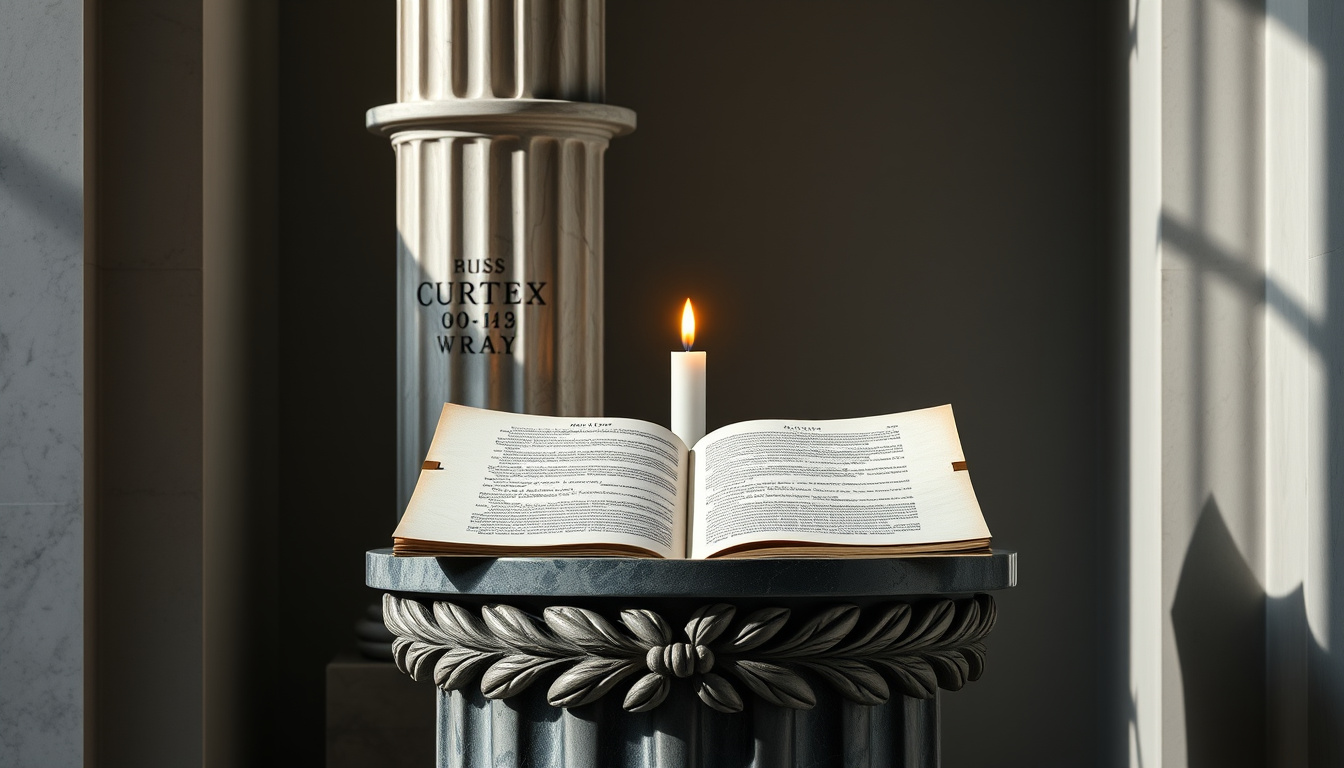

Marcus Aurelius ruled as Roman emperor from 161 to 180 CE, but his lasting legacy rests equally on his role as a Stoic philosopher. He is remembered today for navigating the empire through wars and a devastating plague, and for composing Meditations, a private notebook of philosophical reflections written in Greek that still resonates with readers nearly two millennia later.
Born Marcus Annius Verus on 26 April 121 CE in Rome, he was adopted by Emperor Antoninus Pius in 138 CE as part of a carefully planned succession. His full name as emperor was Marcus Aurelius Antoninus Augustus. He came to power after the death of Antoninus Pius, initially sharing the throne with Lucius Verus in a unique co-emperorship that lasted until Verus’ death in 169 CE.
His reign was marked by constant military pressure on the frontiers, internal strife, and the Antonine Plague. Yet, he is also celebrated as the last of the so-called “Five Good Emperors” and the most famous Stoic philosopher of his era, leaving behind a body of work that has become central to Western philosophical thought.
Who Was Marcus Aurelius? Biography of the Stoic Emperor
Marcus Aurelius at a Glance
- Full Name: Marcus Aurelius Antoninus Augustus
- Born: 26 April 121 AD, Rome
- Died: 17 March 180 AD, Vindobona (Vienna) or Sirmium
- Reign: 161–180 AD (19 years, co-emperor with Lucius Verus 161–169)
- Philosophy: Stoicism
- Famous Work: Meditations (12 books)
- Dynasty: Nerva–Antonine (last of the Five Good Emperors)
- Son: Commodus (emperor 180–192 AD)
Key Insights into His Life and Rule
- Marcus Aurelius is considered the last of the “Five Good Emperors” and the last significant Stoic philosopher of antiquity.
- Meditations was never intended for publication; it was a private journal of philosophical exercises and reflections.
- His reign faced multiple crises: the Antonine Plague, Parthian War, and Germanic invasions.
- Marcus co-ruled with Lucius Verus until Verus’ death in 169 AD, marking a unique shared imperial power structure.
- The popular movie Gladiator (2000) takes significant creative liberties with his death and relationship with Commodus.
Key Facts: Marcus Aurelius
| Category | Detail |
|---|---|
| Full Name | Marcus Aurelius Antoninus Augustus |
| Birth | 26 April 121 AD, Rome |
| Death | 17 March 180 AD (age 58) |
| Cause of Death | Likely Antonine Plague or natural illness (not murder) |
| Reign | 161–180 AD |
| Predecessor | Antoninus Pius (adoptive father) |
| Successor | Commodus (biological son) |
| Major Works | Meditations (12 books) |
| Philosophy | Stoicism |
| Key Events | Antonine Plague (165–180), Marcomannic Wars, Parthian War |
What Are the Meditations of Marcus Aurelius?
A Private Journal of Stoic Practice
Unlike the formal philosophical treatises of his contemporaries, Meditations is a collection of personal notes and reflections. The Stanford Encyclopedia of Philosophy describes the text as an unusual window into how an emperor tried to live as a Stoic, emphasizing the core Stoic claim that virtue alone is good and vice alone is bad. He wrote it for himself, not for an audience, as a way to reinforce his own philosophical principles.
Structure and Language of the Work
The work is composed of 12 books, written in Koine Greek, the common language of the educated elite in the Eastern Roman Empire, rather than his native Latin. The structure is not linear; it is a collection of aphorisms, reflections, and exercises. The core themes include self-discipline, duty, acceptance of what cannot be controlled, and a deep concern for the common good.
Several themes are consistently woven throughout the text. Control what is up to you; accept what is not. Act justly and treat others as parts of a shared human community. Remember impermanence and the passing nature of life and reputation. Use reason to govern the self and keep emotions aligned with virtue.
The Enduring Influence of Meditations
The work has had a profound influence on modern Stoicism and is often cited by contemporary authors and practitioners. It is considered a foundational text for understanding Stoic practice, and its emphasis on resilience and inner peace has found new audiences in the modern world, including in movements like cognitive behavioral therapy. Yale University Press calls him the “last famous Stoic philosopher of antiquity.”
What Are the Most Famous Marcus Aurelius Quotes?
On Inner Strength and Perception
One of the most frequently cited passages from Meditations speaks directly to the power of the mind over external events. The maxim “You have power over your mind — not outside events. Realize this, and you will find strength” (Book 4) encapsulates the Stoic emphasis on internal control. Similarly, “The happiness of your life depends upon the quality of your thoughts” (Book 5) reinforces the idea that perception shapes reality.
On Action and Duty
Marcus Aurelius was deeply concerned with ethical action and social duty. A line from Book 10 captures this bluntly: “Waste no more time arguing about what a good man should be. Be one.” Another passage from Book 7 reads, “The soul becomes dyed with the color of its thoughts,” suggesting that character is built through consistent mental discipline.
On Acceptance and Impermanence
The acceptance of fate and the impermanence of life are recurring themes. He advises, “Accept the things to which fate binds you, and love the people with whom fate brings you together, but do so with all your heart” (Book 7). This reflects the Stoic ideal of amor fati, or love of one’s fate.
“People exist for the sake of one another; teach them, then, or bear with them.” — World History Encyclopedia attributes this line to him, capturing his ethical ideal of social duty and patience. All of these quotes are directly sourced from the 12 books of Meditations.
How Did Marcus Aurelius Die? Cause and Circumstances
The Historical Record
Marcus Aurelius died on 17 March 180 CE, at the age of 58, while on a military campaign near the Danube frontier. The exact location is disputed among historians, with some pointing to Vindobona (modern Vienna) and others to Sirmium. His son Commodus was present at his deathbed and succeeded him immediately.
Separating Fact from Fiction
The exact cause of death is historically debated. Most modern accounts describe it as natural, likely due to a contagious illness. Yale University Press suggests it was “presumably the Antonine Plague,” a devastating pandemic that had swept through the empire. The World History Encyclopedia states he died of natural causes after an illness and was immediately deified.
The 2000 film Gladiator depicts Marcus Aurelius being murdered by his son Commodus. There is no historical evidence to support this. The notion of poisoning, hinted at by the unreliable Historia Augusta, is not widely accepted by modern historians. The film’s portrayal is a dramatic fiction.
Who Was Marcus Aurelius’s Son? The Story of Commodus
Succession and the End of an Era
Marcus Aurelius broke with the tradition of adoptive succession that had given Rome the “Five Good Emperors” by elevating his biological son, Commodus, as co-emperor before his death. Commodus then succeeded him as sole emperor. While Marcus had hoped to prepare his son for the role, Commodus’s reign is almost universally regarded as a disaster.
The Legacy of Commodus
Commodus quickly ended the northern military campaigns that his father had pursued, making peace with the Germanic tribes. His reign is often treated by historians as the beginning of the decline from the idealized era of the Antonines. He was assassinated in 192 CE, ending the Nerva-Antonine dynasty.
Timeline of Marcus Aurelius’s Life and Reign
- 26 April 121 AD: Born in Rome to a prominent political family.
- 138 AD: Adopted by Emperor Antoninus Pius at the request of Hadrian.
- 140 AD: Consul for the first time (held three consulships total).
- 145 AD: Marries Faustina the Younger (daughter of Antoninus Pius).
- 161 AD: Becomes emperor upon death of Antoninus Pius; appoints Lucius Verus co-emperor.
- 162–166 AD: Parthian War (largely led by Verus).
- 165–180 AD: Antonine Plague ravages the Roman Empire.
- 169 AD: Death of Lucius Verus; Marcus becomes sole emperor.
- 170–180 AD: Marcomannic Wars along the Danube frontier.
- 175 AD: Avidius Cassius rebellion in the east (quickly suppressed).
- 17 March 180 AD: Dies at Vindobona (modern Vienna) or Sirmium during campaign.
Certainty vs. Uncertainty: What We Really Know About Marcus Aurelius’s Death
| Established Information | Information That Remains Unclear |
|---|---|
| He died on 17 March 180 AD. | The exact cause of death is historically debated; accounts mention illness or plague. |
| He died during a military campaign near the Danube frontier. | Some ancient sources (Historia Augusta, considered unreliable) hint at poisoning by doctors, but this is not widely accepted by modern historians. |
| His son Commodus was present and succeeded him. | The exact location of death is disputed between Vindobona and Sirmium. |
| Hollywood depictions (Gladiator) showing him murdered by Commodus are fictional; no historical evidence supports this. |
Context and Legacy: The Philosopher-King in History
Marcus Aurelius is often held up as the ideal of the “philosopher-king,” a ruler who sought to govern according to philosophical principles. The Antonine Plague, which killed millions, was a formative crisis that shaped his reign and his philosophical outlook. The literary structure of Meditations—12 books of personal notes and Stoic exercises written in Koine Greek—reveals a man constantly working on himself, even as he managed an empire.
His decision to choose his biological son Commodus as his successor, rather than adopting a capable heir, is often cited by historians as a factor in Rome’s subsequent decline. This decision, made for personal or political reasons, inadvertently ended the golden age of the Five Good Emperors and ushered in a period of instability. For a broader look at historical figures and their impact, you might be interested in the life of Marco Polo – History, Netflix Series, Games and Brands.
Essential Marcus Aurelius Quotes and Their Sources
“You have power over your mind — not outside events. Realize this, and you will find strength.”
— Meditations, Book 4
“The happiness of your life depends upon the quality of your thoughts.”
— Meditations, Book 5
“Waste no more time arguing about what a good man should be. Be one.”
— Meditations, Book 10
Further Exploration of Marcus Aurelius and Stoicism
Marcus Aurelius remains a singular figure in history, a ruler who turned inward to find the strength to govern an empire. His Meditations continues to offer practical wisdom for modern life. For those interested in the broader context of the classical world, exploring the work of historians like Bettany Hughes – Biography, Books, TV Shows and Tour 2025 can provide further insight into the ancient world. To delve deeper, one can read the full text of Meditations online or explore the works of other Stoic philosophers like Seneca and Epictetus.
Frequently Asked Questions About Marcus Aurelius
Can I download Marcus Aurelius’s Meditations as a PDF?
Yes, Meditations is in the public domain. Free PDFs are available from Project Gutenberg and other online archives.
Was Marcus Aurelius a Christian?
No, he was a pagan and a Stoic philosopher. He did, however, write about treating Christians fairly during persecutions in his empire.
What is the relationship between Marcus Aurelius and Lucius Verus?
Lucius Verus was Marcus’s adoptive brother and co-emperor from 161 until Verus’ death in 169 AD. They shared power, with Verus leading campaigns in the east.
Did Marcus Aurelius really say ‘The object of life is not to be on the side of the majority…’?
This quote is often attributed to him but does not appear in Meditations. It is likely a modern paraphrase or misattribution.
What language did Marcus Aurelius write Meditations in?
He wrote in Koine Greek, the common language of the educated elite in the Eastern Roman Empire, though his native language was Latin.

Jack Thomas Clarke Thompson is a staff writer for PopCultureDaily.co.uk, covering entertainment news, film, television, streaming and celebrity culture. He works under Editor-in-Chief Harriet Winslow and Managing Editor Lucas Bennett, following the newsroom standards for sourcing, verification and fact-checking set out in our editorial policies.