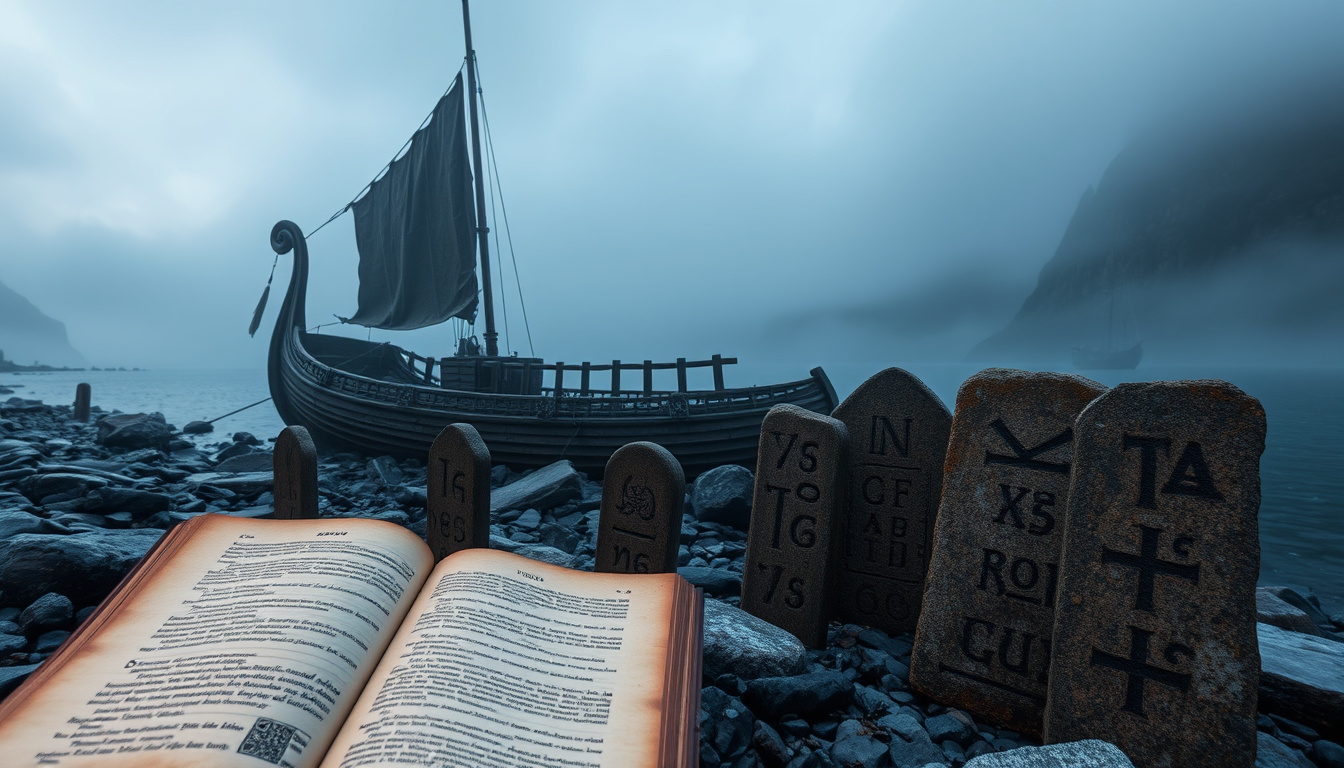
Ragnar Lothbrok is one of the most famous names from the Viking Age, but separating the man from the myth is no simple task. This semi-legendary figure appears in 13th‑century Icelandic sagas as a heroic king and fearless raider, while scattered Frankish and Anglo‑Saxon chronicles hint that a real Viking leader by that name may have terrorised northern Europe in the 9th century. The following article examines everything from his disputed existence and his celebrated sons to his iconic portrayal by Travis Fimmel in the TV series Vikings – always keeping fact distinct from legend.
For centuries scholars have debated whether Ragnar Lothbrok ever lived. The sagas present him as a near‑mythical warrior who sacked Paris, fought in England, and died in a pit of snakes. Yet many historians believe the name covers one or more actual raiders whose exploits were later fused into a single legendary hero. The question is far from settled, but the evidence – and the uncertainty – is worth exploring in detail.
What follows is a fact‑based, journalism‑style look at Ragnar Lothbrok: the historical clues, the saga stories, the modern pop‑culture phenomenon, and everything in between. Each claim is sourced from the chronicles, scholarly analysis, and the best available research.
Was Ragnar Lothbrok a Real Person?
- Legend vs History: Ragnar Lothbrok is a semi‑legendary figure; his existence is debated but likely based on a real 9th‑century Viking leader.
- TV Portrayal: Travis Fimmel played Ragnar in the History Channel series Vikings (2013‑2020), which blends saga elements with fiction.
- Notable Sons: According to sagas, his sons included Ivar the Boneless, Björn Ironside, Sigurd Snake‑in‑the‑Eye, and Ubbe.
- Legendary Death: The most famous account says Ragnar was thrown into a pit of snakes by King Ælla of Northumbria.
- Composite figure: Ragnar’s historical core likely derives from multiple Viking raiders conflated into one legendary figure – medieval chronicles and sagas contain contradictory accounts, suggesting a composite character.
- TV liberties: The Vikings TV series, while inspired by the sagas, takes significant creative liberties – Ragnar’s storyline is largely fictional.
- Sons more historical: Ragnar’s sons are better historically attested than Ragnar himself; they led the Great Heathen Army in the 9th century. Anglo‑Saxon chronicles record Ivar, Ubbe, and Halfdan as historical leaders.
- No contemporary portraits: The earliest surviving saga accounts date from the 13th century, centuries after the events.
- Frankish annals: The Frankish annals mention a Viking leader named “Reginherus” who sacked Paris in 845.
| Attribute | Value |
|---|---|
| Full Name (Legend) | Ragnar Lothbrok (or Lodbrok, meaning “Hairy Breeches”) |
| Era | 9th century (flourished c. 845 AD) |
| Known For | Raiding Britain, France, and Ireland; father of famous Viking leaders |
| Primary Sources | Tale of Ragnar Lodbrok, Ragnars saga loðbrókar, Gesta Danorum |
| Historicity | Contentious – likely based on one or more historical figures, but details are legendary |
| TV Actor | Travis Fimmel (Vikings, 2013‑2020) |
Who Played Ragnar Lothbrok in Vikings?
Australian actor Travis Fimmel portrayed Ragnar Lothbrok in the History Channel series Vikings from 2013 to 2020. His performance turned the character into a household name, but the show’s version of Ragnar is a fictionalised amalgam inspired by the sagas rather than a strict historical reconstruction. The series blends real events – such as the raid on Paris – with dramatised personal relationships and a manufactured downfall that never appears in any medieval source.
In the show, Ragnar orchestrates his own death in England to provoke his sons into invasion. No historical record supports that story. The real Ragnar, if he existed, likely died in the Irish Sea between 852 and 856 AD. The snake‑pit legend appears only in later sagas.
Is there a Ragnar Lothbrok movie?
As of 2025 there is no major Hollywood film solely about Ragnar Lothbrok. He appears as a central character in the TV series Vikings and in several documentaries. A few independent films exist, but none have achieved wide recognition.
What are the best books about Ragnar Lothbrok?
For those wanting to read the original saga, Jackson Crawford’s translation The Saga of the Volsungs and the Saga of Ragnar Lothbrok is widely recommended. For historical analysis, The Sea Wolves: A History of the Vikings by Lars Brownworth provides context. Another accessible option is Ragnar Lothbrok: The Extraordinary Story of a Fearsome Viking Warrior.
Who Were Ragnar Lothbrok’s Sons and Wife?
Ragnar’s wives in legend
According to the sagas, Ragnar had three wives. The first was Lagertha (Ladgerda), a shield‑maiden whom he married after killing a bear and a hound to win her hand. Their son is sometimes named Fridleif. She appears as a powerful warrior queen in the TV series but has no historical record outside legend.
His third wife was Aslaug (Kraka), who bore most of his famous sons. She is depicted in the sagas as wise and prophetic, though her historicity is as uncertain as Ragnar’s.
The sons of Ragnar
- Ivar the Boneless (Inwaer) – historically confirmed leader of the Great Heathen Army (865‑870). The cause of his nickname remains unknown.
- Björn Ironside – legendary king of Sweden; historically plausible.
- Sigurd Snake‑in‑the‑Eye – named after a snake‑bite birthmark; likely fictional.
- Halfdan Ragnarsson – historically confirmed leader of the Great Heathen Army.
- Ubbe (Hubba) – led the invasion of East Anglia; historically confirmed.
All these sons are more historically verified than Ragnar himself. The Great Heathen Army that invaded England in 865 was led by men who called themselves sons of Ragnar, making it probable that at least one real Viking leader of that name existed.
The best‑known story of Ragnar’s death – captured by King Ælla of Northumbria and thrown into a snake pit – appears only in 12th‑ and 13th‑century sources such as Saxo Grammaticus’s Gesta Danorum and the Icelandic sagas. No contemporary record supports it. Most historians believe he died in the Irish Sea between 852 and 856 AD.
What Does Ragnar Lothbrok Really Look Like?
No contemporary portrait or physical description of Ragnar survives. The sagas say he wore “hairy breeches” (the meaning of Lothbrok) – trousers coated in tar to resist snake bites – but this is almost certainly legendary. Artistic depictions vary widely: from the long‑haired, bearded warrior of popular culture to more fanciful medieval manuscript illustrations. The “real face” of Ragnar remains unknown.
When Did Ragnar Lothbrok Live? A Timeline of Legend and History
- c. 845 AD (historical): A Viking leader named Reginherus (possibly Ragnar) sacks Paris, recorded in Frankish annals.
- c. 853 AD (historical): A Viking Ragnar appears in Irish annals, raiding in the Irish Sea region.
- c. 852‑856 AD (historical): Most likely period of Ragnar’s death – in the Irish Sea, not a snake pit.
- 865 AD (historical): The Great Heathen Army arrives in England, led by men calling themselves sons of Ragnar (Ivar, Halfdan, Ubbe).
- 871 AD (historical): Ivar the Boneless dies, recorded in Anglo‑Saxon chronicles.
- 12th‑13th centuries (legendary): The stories of Ragnar’s life and snake‑pit death are written down in Gesta Danorum and the Icelandic sagas.
What Do Historians Actually Know About Ragnar Lothbrok?
| Established information | Information that remains unclear |
|---|---|
| Ragnar’s sons (Ivar, Halfdan, Ubbe) were real historical figures who led the Great Heathen Army. | Whether Ragnar himself was a single historical person or a composite of several raiders. |
| The name Lothbrok means “hairy breeches” – possibly from tar‑coated trousers. | Whether the snake‑pit death ever happened; it is not attested in contemporary sources. |
| Frankish chronicles record a Viking leader “Reginherus” sacking Paris in 845. | The exact relationship between this Reginherus and the saga Ragnar |
| The sagas were composed centuries after the events they describe. | Any reliable physical description or portrait of Ragnar |
Why Does Ragnar Lothbrok Still Matter Today?
Ragnar Lothbrok remains a powerful symbol of Viking identity and resistance. His story – as told in the sagas – provided a heroic origin for the Great Heathen Army’s campaign in England. In modern times, the Vikings TV series revitalised global interest in Norse culture and sparked a surge in tourism to Scandinavian and British historical sites.
Scholars continue to debate Ragnar’s historicity. Key researchers such as Rory McTurk and Judith Jesch have analysed the sagas critically, concluding that while Ragnar may be based on a real 9th‑century raider, the legendary details are largely literary inventions. Ongoing archaeological digs in the British Isles and Scandinavia may one day provide clearer answers.
For a broader perspective on the era, see our Viking Age History Overview.
What Do Primary Sources and Historians Say About Ragnar Lothbrok?
Ragnar Lothbrok is a figure of legend, but he may have been based on a real Viking leader whose exploits were exaggerated over time.
Britannica (encyclopedic entry)
The sons of Ragnar are more historical than the father. Their campaign in England is well-documented.
Historian Dr. Janina Ramirez (BBC documentary) – paraphrased
There is no contemporary evidence that Ragnar Lothbrok ever existed. He appears in 12th‑ and 13th‑century sagas, centuries after the events.
History UK (article on Ragnar Lothbrok)
Additional reading: Top Viking Sagas Explained.
Was Ragnar Lothbrok Real? The Final Verdict
The most balanced answer is that Ragnar Lothbrok was almost certainly based on one or more real 9th‑century Viking raiders, but the colourful details of his life – the snake‑pit death, the heroic last words, the shield‑maiden wife – are legends crafted centuries later. His sons are historically solid; the father remains elusive. For anyone interested in the Viking Age, Ragnar’s story is a fascinating blend of fact and fiction that continues to captivate audiences worldwide.
Frequently Asked Questions
Ragnar Lothbrok book – which books are best?
For the sagas: The Saga of the Volsungs and the Saga of Ragnar Lothbrok (translated by Jackson Crawford). For historical analysis: Ragnar Lothbrok: The Extraordinary Story of a Fearsome Viking Warrior by various authors; or The Sea Wolves: A History of the Vikings by Lars Brownworth.
Ragnar Lothbrok movie – is there a film?
There is no major Hollywood film solely about Ragnar Lothbrok as of 2025, but he appears in the TV series Vikings and in documentaries. Some independent films exist, but none are widely known.
What does the name Lothbrok mean?
“Lothbrok” is Old Norse for “hairy breeches” or “shaggy breeches”. Legend says Ragnar wore tar‑coated animal‑skin trousers to protect himself from snake bites.
Was Lagertha a real person?
There is no historical record of a shield‑maiden named Lagertha. She appears only in the sagas and in the TV series Vikings, where she is depicted as a powerful warrior queen.
What happened to Ivar the Boneless?
Ivar the Boneless was a historical leader of the Great Heathen Army. He died in 871 AD, likely in England, though the exact cause is unknown. The sagas later embellished his story.

Jack Thomas Clarke Thompson is a staff writer for PopCultureDaily.co.uk, covering entertainment news, film, television, streaming and celebrity culture. He works under Editor-in-Chief Harriet Winslow and Managing Editor Lucas Bennett, following the newsroom standards for sourcing, verification and fact-checking set out in our editorial policies.