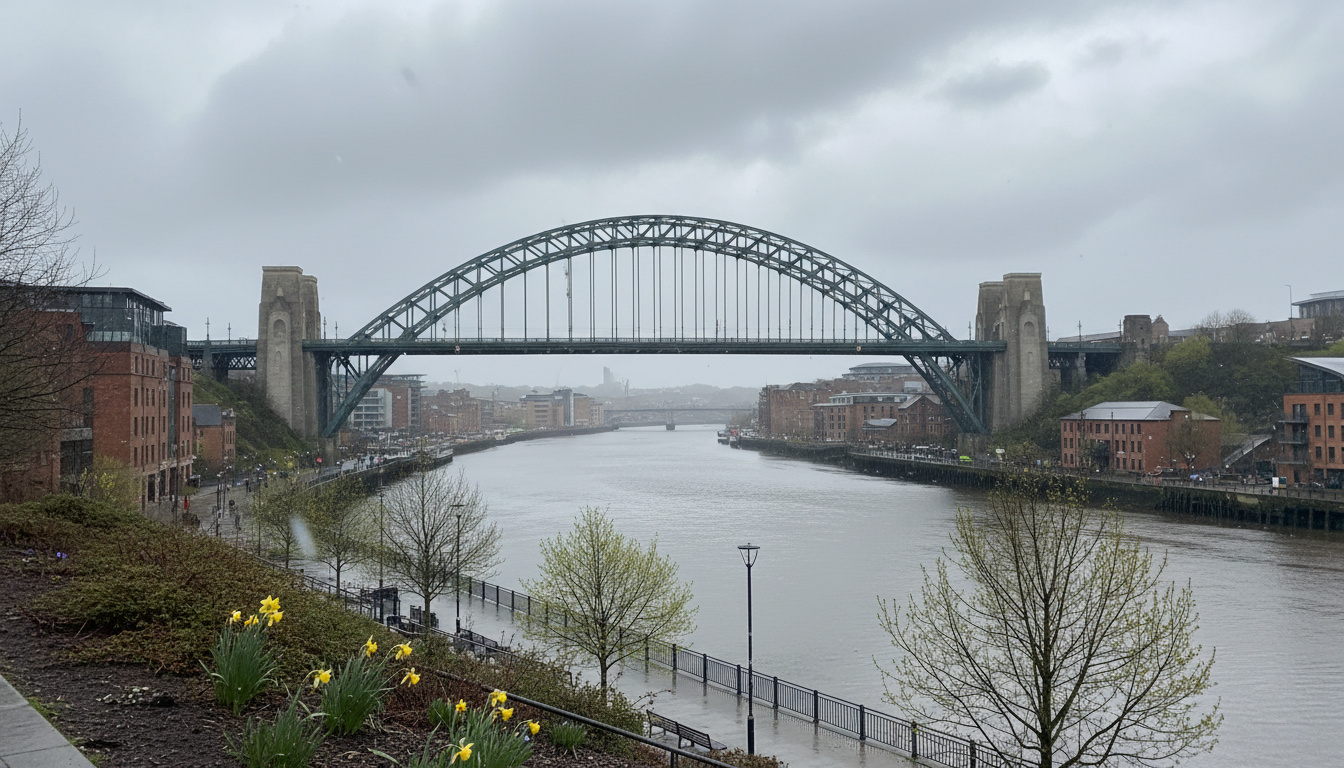
Late March in Newcastle upon Tyne brings persistent cold and muted skies, with airport observations recording steady temperatures around 6°C amid mist and overcast conditions. Historical data for the period reveals typical early spring patterns for England’s North East, where maritime influences maintain a damp chill despite lengthening daylight hours.
The region retains its reputation for unsettled weather during this transitional window, with climatological records indicating daily highs struggling between 7-12°C and nighttime lows dipping to 2-5°C. Residents navigate mornings of reduced visibility and variable winds that sweep across the Tyne, carrying moisture inland from the North Sea.
Multiple meteorological archives confirm late March 2026 followed these established patterns, combining patchy precipitation events with intervals of calm pressure systems. Data compiled from Weather Spark and Weather25 establishes a clear baseline for understanding the city’s atmospheric behavior during this period.
What’s the Weather Like in Newcastle upon Tyne Today?
Recent METAR transmissions from Newcastle Airport (EGNT) captured conditions around March 20, revealing a temperature of 6°C with very light variable winds registering as VRB02KT. Atmospheric pressure measured 1024 hPa under overcast low cloud layers coded OVC002///, while surface visibility reduced to 2000 meters due to mist.
Key Insights for Late March
- Overnight temperatures regularly fall between 3-5°C, creating frost risks during clear periods
- Wind speeds vary from calm conditions to moderate breezes reaching 8-13 mph, occasionally gusting to 18 mph
- Humidity levels fluctuate based on dew point, ranging from dry comfort to humid maritime air
- Cloud cover remains predominantly overcast throughout the period
- Daylight extends to approximately 11.8 hours daily, with sunrise near 6:29 AM and sunset at 6:16 PM
- Precipitation totals average 54mm across March, distributed over roughly six rainy days
- Snow remains possible, with historical data indicating four days of light accumulation totaling 0.4 cm
| Metric | Late March Value | Source Basis |
|---|---|---|
| Average High | 7-9°C (45-48°F) | Weather25 |
| Average Low | 1-3°C (34-37°F) | WeatherNetwork |
| Feels Like (High) | 4°C (39°F) | Wanderlog |
| Total Precipitation | 54 mm | Weather25 |
| Rainy Days | 6 days | WeatherNetwork |
| Wind Direction | Variable (N/E/S/W) | Weather Spark |
| Visibility | 2000m (mist) | METAR EGNT |
| Pressure | 1024 hPa | METAR EGNT |
Newcastle upon Tyne 7-Day Weather Forecast
Projections for late March transitioning into early April indicate persistent cold with moderate fluctuations. Weather25 data suggests Tuesday, March 31 brings patchy rain potential with temperatures reaching 13°C highs and 5°C lows, while Wednesday, April 1 maintains similar moderate conditions at 13°C/5°C.
Weekend Outlook
Weekend periods during this window typically reflect the month’s unsettled character, with AccuWeather historical records showing March 30 conditions at 9°C/5°C. The extended 14-day outlook includes four days with potential snow accumulation and three to eight rainy days overall, requiring flexible planning for outdoor activities.
Late March weather in Newcastle demonstrates significant day-to-day variability. Historical patterns suggest packing layers capable of handling 10-degree temperature swings between morning lows and afternoon highs, particularly when wind chill factors reduce perceived temperatures.
Monthly Trends
Climate-Data.org archives indicate the hottest late-period days (March 21-31) averaged only 6.4°C, emphasizing the persistent wintry feel. Broader UK forecast patterns confirm the North East maintains cooler temperatures than southern regions during this transitional phase.
Hourly Forecast and Rain Chance in Newcastle upon Tyne
Hourly analysis reveals distinct diurnal patterns throughout late March. Overnight hours between midnight and 6:00 AM consistently register the coldest readings, frequently dropping into the 3-5°C range. Sunrise at approximately 6:29 AM corresponds with temperature nadirs before gradual warming commences.
Daily Temperature Progression
Morning commutes between 8:00-10:00 AM typically encounter temperatures rising from overnight lows toward 6-7°C. Afternoon peaks between 14:00-16:00 reach maximum daily values of 7-9°C for the late period, according to Weather Spark hourly banding data. Sunset around 6:16 PM triggers rapid cooling as radiational heat loss accelerates.
Dew point analysis categorizes comfort levels from dry to potentially humid depending on wind trajectory. Maritime air masses from the North Sea elevate moisture content, while continental flows bring drier conditions. Twilight periods visually dominate hourly charts, reflecting limited solar intensity during early spring.
Precipitation Probability
Specific hourly precipitation timing remains unspecified in available datasets, though monthly aggregates indicate patchy rain becomes increasingly likely toward March 31. Regional weather systems tracking across the North East frequently deposit moisture during afternoon and evening hours when atmospheric instability peaks.
Weather Warnings and Radar for Newcastle upon Tyne
Available historical datasets for late March 2026 contain no active weather warnings or emergency alerts. Real-time radar imagery and live precipitation tracking from official meteorological services require direct consultation of the Met Office or BBC Weather platforms, as these multimedia resources fall outside current archival records.
Current sources emphasize historical climatology over real-time monitoring. No radar animations, live rain warnings, or immediate Met Office bulletins appear in the accessible meteorological record. Residents seeking immediate alert information should consult official government weather services directly.
General Risk Assessment
Late March presents generalized risks including patchy rain events and minor snow accumulations totaling 0.4 centimeters across four potential days. Mist and fog episodes reduce visibility to 2000 meters or less during early morning hours, particularly around the River Tyne corridor. These conditions demand caution for maritime and aviation traffic at Newcastle Airport. These conditions demand caution for maritime and aviation traffic at Newcastle Airport, and for further details, please see our Aussie airport travel warning.
Daily Weather Timeline for Late March
- Overnight low temperatures settle between 3-5°C with calm winds and breaking cloud cover
- Sunrise occurs amid frequent mist patches reducing visibility to 2000 meters
- Morning commute temperatures gradually rise from overnight nadirs toward 6-7°C
- Daily peak temperatures reach 7-9°C during afternoon hours with variable wind directions
- Sunset triggers rapid radiational cooling as daylight fades
- Evening temperatures descend toward overnight baselines
- Patchy rain becomes possible with highs reaching 13°C
- Moderate conditions continue at 13°C/5°C marking the monthly transition
Established Facts and Remaining Uncertainties
Confirmed Data
- Temperature averages: 7-9°C highs, 1-3°C lows
- Total March precipitation: 54mm over approximately 6 days
- Daylight duration: 11.8 hours daily
- Snow accumulation potential: 0.4cm across 4 days
- Historical METAR confirms 6°C baseline with 1024 hPa pressure
- Wind speeds documented from 0-18 mph
Information Gaps
- Real-time radar imagery availability
- Specific hourly precipitation timing for individual days
- Met Office immediate warnings for precise dates
- Exact timing of snow accumulation events
- UV index and solar radiation specifics
- Microclimatic variations across city districts
Geographic and Seasonal Context
Newcastle upon Tyne occupies a strategic position on the River Tyne estuary, approximately 8.5 miles from the North Sea coast. This maritime exposure subjects the urban center to persistent maritime polar air masses during late March, moderating temperature extremes while increasing humidity and cloud cover relative to inland locations.
The city’s topography channels easterly weather systems through the Tyne gap, frequently trapping moisture as advection fog and low stratus clouds. Historical climatology confirms that late March represents a stubborn transitional phase where solar gains remain insufficient to displace winter’s thermal inertia, despite the vernal equinox having passed. Wanderlog data characterizes the period as consistently cold and windy, with “feels like” temperatures often registering 2-4 degrees below actual thermometer readings.
Sources and Data Reliability
This analysis draws from multiple meteorological archives including automated weather stations, historical METAR aviation reports, and climatological databases. Weather Spark provides granular hourly banding and comfort indices, while Weather25 compiles daily aggregation and precipitation probabilities.
A recent METAR report from Newcastle Airport (EGNT) indicates calm winds (VRB02KT), visibility reduced to 2000m due to mist (BR), overcast low cloud (OVC002///), and steady temperature of 6°C (06/06) with pressure at Q1024.
National Oceanic and Atmospheric Administration via Weather Spark Archive
The hottest late period (March 21-31) recorded highs around 6.4°C (43.5°F) with windy, cold descriptors dominating local observations.
Climate-Data.org Historical Archive
Summary of Current Conditions
Late March weather in Newcastle upon Tyne demands preparation for persistent cold, with historical data establishing a temperature range of 2-13°C, frequent overcast skies, and patchy precipitation totaling 54mm monthly. Residents should anticipate misty mornings with 2000-meter visibility and maintain awareness of potential snow events across four days, while consulting live UK forecast services for real-time updates beyond these historical baselines.
Frequently Asked Questions
What time does the sun rise and set in Newcastle upon Tyne during late March?
Sunrise occurs at approximately 6:29 AM with sunset at 6:16 PM, providing roughly 11.8 hours of daylight according to Wanderlog historical records.
How cold does it feel in Newcastle upon Tyne with wind chill?
Wind chill reduces perceived temperatures significantly, with highs feeling like 4°C and lows potentially feeling like -2°C despite thermometer readings of 7°C and 1°C respectively.
Does snow fall in Newcastle upon Tyne during late March?
Historical data indicates four days with snow potential in late March, accumulating approximately 0.4 centimeters total, though individual events remain light and sporadic.
What are the wind conditions typically like?
Winds vary from calm (0 mph) to moderate breezes (8-13 mph), occasionally reaching fresh speeds of 18 mph, with variable direction across all compass points.
How much rain falls in Newcastle upon Tyne during March?
March typically receives 54 millimeters of precipitation distributed over approximately six rainy days, with late March showing 3-8 days of potential rainfall.
Why is visibility sometimes reduced to 2000 meters?
Mist (coded as BR in meteorological reports) frequently develops over the River Tyne and surrounding low-lying areas, particularly during early morning hours when temperature differentials create condensation.
Are there any weather warnings currently active?
Historical records for late March 2026 show no active weather warnings. Current alerts require verification through the Met Office or BBC Weather services.

Jack Thomas Clarke Thompson is a staff writer for PopCultureDaily.co.uk, covering entertainment news, film, television, streaming and celebrity culture. He works under Editor-in-Chief Harriet Winslow and Managing Editor Lucas Bennett, following the newsroom standards for sourcing, verification and fact-checking set out in our editorial policies.