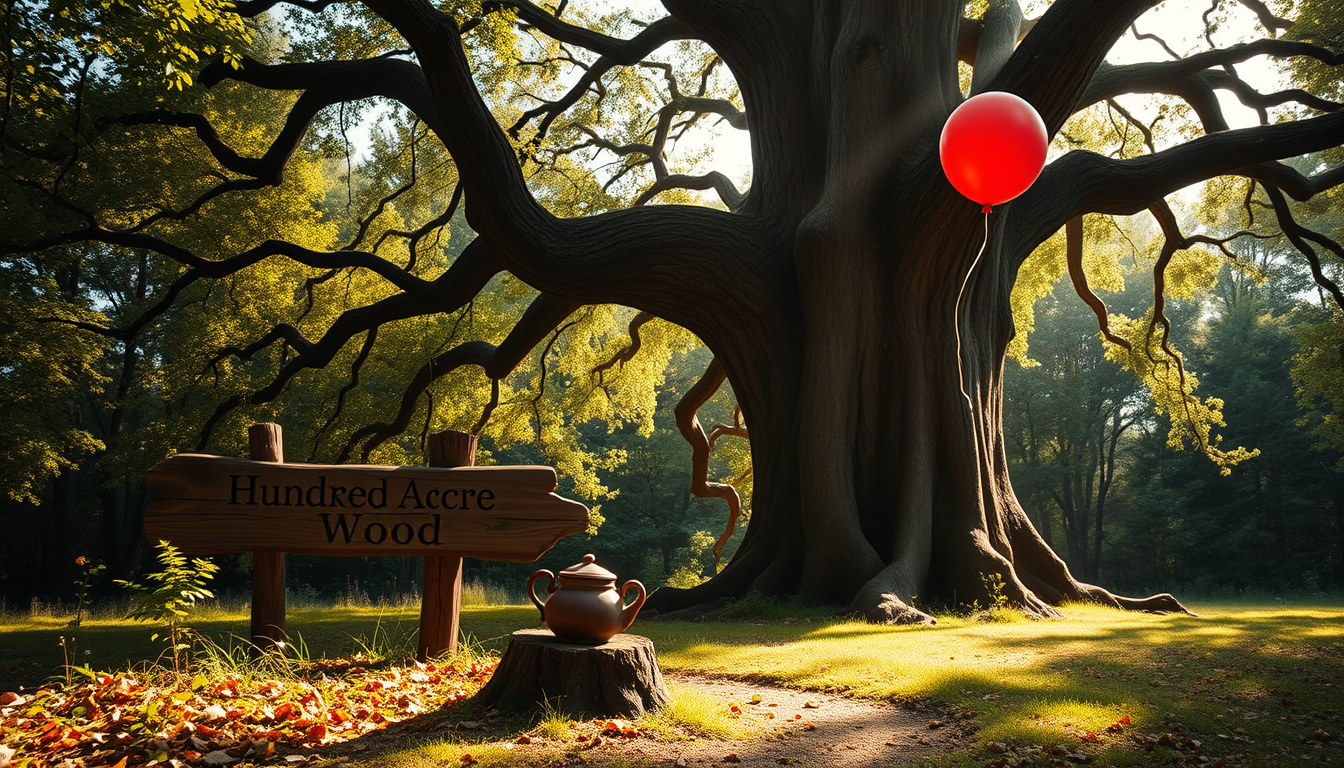

For nearly a century, Winnie-the-Pooh has been a familiar face in children’s literature and popular culture. What began as a collection of stories written by A. A. Milne for his son has grown into a global franchise spanning books, films, merchandise, and even a controversial horror adaptation. The character’s journey from the pages of a 1926 book to the public domain and modern reimaginings offers a fascinating look at how storytelling, copyright law, and commercial interests intersect.
The bear known as Winnie-the-Pooh was inspired by a real teddy bear owned by Christopher Robin Milne, the author’s son, and a Canadian black bear named Winnie that lived at the London Zoo. Milne’s stories, brought to life by illustrator E. H. Shepard, introduced readers to the Hundred Acre Wood—a fictional setting loosely based on Ashdown Forest in East Sussex—and a cast of beloved animal characters. The first book, Winnie-the-Pooh, was published in 1926, followed by The House at Pooh Corner in 1928.
Who Created Winnie the Pooh and What Are the Main Characters?
A honey-loving teddy bear created by A. A. Milne in 1926. Known for his simple wisdom and love for his friends in the Hundred Acre Wood.
Pooh, Piglet, Tigger, Eeyore, Rabbit, Owl, Kanga, Roo, and Christopher Robin – each with distinct personalities.
From Disney’s classic 1960s shorts to the 2011 feature and the surprise 2023 horror film Blood and Honey.
Public domain since 2022 in the US, allowing new creative works – including horror adaptations and independent merchandise.
Key Insights About Winnie-the-Pooh
- Winnie the Pooh remains a top children’s brand yet now also appeals to adults via nostalgia and horror reboots.
- Public domain status has opened floodgates for derivative works, with Blood and Honey being the most controversial.
- Disney’s official merchandise and content still dominate search, but independent sellers are growing.
- Quotes from Pooh are among the most shared on social media for mindfulness and friendship themes.
- The original books are the source of public-domain material, while Disney’s later interpretations remain separately protected.
- Milne’s literary copyrights were separate from merchandising and adaptation rights.
- Pooh is described as Disney’s “second most successful character” after Mickey Mouse.
Winnie-the-Pooh: Key Facts at a Glance
| Fact | Value |
|---|---|
| Creator | A. A. Milne |
| First appearance | 1926 in Winnie-the-Pooh book |
| Real name | Edward Bear (also known as Pooh Bear) |
| Habitat | Hundred Acre Wood (based on Ashdown Forest) |
| Illustrator | E. H. Shepard |
| Disney debut | 1966 in Winnie the Pooh and the Honey Tree |
| Public domain (US) | Original book entered PD in 2022; later works still protected |
| 2023 horror film | Winnie-the-Pooh: Blood and Honey – independent slasher |
What Are the Best Winnie the Pooh Movies and How Does Blood and Honey Fit In?
Disney began adapting Pooh in the 1960s, with the first release being Winnie the Pooh and the Honey Tree in 1966. That short was followed by others, eventually compiled into the 1977 feature film The Many Adventures of Winnie the Pooh. In 2011, Disney released a theatrically animated Winnie the Pooh film that received critical acclaim for its gentle storytelling and hand-drawn style.
The Disney Version vs. the Original Books
The Disney adaptation is a separate visual and commercial interpretation that began in the 1960s and is protected as its own copyrighted expression. The original Milne/Shepard Pooh is more restrained and book-based, tied to the 1926 and 1928 texts. Disney later added or emphasized characters not found in the original books, such as Gopher. The Disney depictions are distinct from the original book illustrations and remain copyrighted even though the underlying literary characters have entered the public domain.
Winnie-the-Pooh: Blood and Honey – The Horror Reimagining
Winnie-the-Pooh: Blood and Honey is a 2023 British independent slasher film directed by Rhys Frake-Waterfield. It portrays Pooh and Piglet as feral killers hunting young women and Christopher Robin. The film became possible after the 1926 book entered the U.S. public domain, but it could not copy Disney’s character designs. One article notes the movie made more than $6 million on a $100,000 budget, though that figure comes from a secondary report. This film is not part of the official Pooh canon and is not connected to Disney’s version.
Public-domain Pooh is legally usable only in ways that rely on the original book’s material, not Disney’s later additions. This legal split explains why creators can use the original Milne material while avoiding Disney-specific visual traits and later story elements.
Where to Find Official Winnie the Pooh Gifts, LEGO Sets, and Merchandise
Pooh became a major merchandising property through rights deals that began long before Disney. In 1930, Stephen Slesinger acquired North American merchandising and recording rights. Disney later obtained rights through the Slesinger family in 1961, which helped transform Pooh into a large consumer-products franchise.
Commercial Pooh gifts and products generally fall into two categories: items based on the public-domain literary characters and items based on the Disney-branded versions. Popular adult gifts include vintage-style book collections, minimalist quote prints, LEGO sets (such as 21326 Winnie the Pooh), and collectible figurines. For children, soft toys, clothing, and playsets remain consistently popular. Limited edition collectibles and anniversary merchandise are frequently released through official Disney channels.
What Are the Most Famous Winnie the Pooh Quotes and How to Draw Him?
Many famous Pooh quotes are genuine Milne lines. “Sometimes the smallest things take up the most room in your heart” comes from Milne’s original writings. “A hug is always the right size” is another well-known line cited in coverage of the public-domain discussion. Another widely shared quote—”If you live to be a hundred, I want to live to be a hundred minus one day…”—is noted as not written by Milne. Because many Pooh quotations circulate online without attribution, it is important to distinguish authentic Milne quotes from later paraphrases or misattributions.
For those interested in drawing Pooh, the character’s design is relatively simple: a rounded bear with a tight red shirt, small ears, and a gentle expression. The original E. H. Shepard illustrations show a slightly scruffier, more bear-like appearance compared to Disney’s smoother, more cartoonish version. Step-by-step tutorials often begin with the basic head shape and add the facial features, ears, and shirt gradually.
Because many Pooh quotations circulate online without attribution, it is important to distinguish authentic Milne quotes from later paraphrases or misattributions. Refer to the original books for verified lines.
When Did Winnie the Pooh Enter the Public Domain and Why Does It Matter?
In the United States, the original 1926 Winnie-the-Pooh book entered the public domain on January 1, 2022. This means the earliest versions of Pooh, Piglet, Christopher Robin, and other characters appearing in that book are now available for new uses based on that book. However, the Disney versions did not enter the public domain and are still protected by copyright. That legal split is why creators can use the original Milne material while avoiding Disney-specific visual traits and later additions.
A Brief History of Winnie-the-Pooh’s Creation
Milne’s Pooh stories were originally written for his son, Christopher Robin, who also became a character in the books. The first appearance of the name “Winnie-the-Pooh” is described in a Christmas Eve 1925 commission, before the first book was published. The real-life inspiration was a female black bear named Winnie (after Winnipeg) who lived at the London Zoo and was visited by Milne and his son. The teddy bear owned by Christopher Robin Milne was the physical model for the character.
Some believe Pooh’s real name is “Winnie” after the real bear, but his full name in the stories is actually “Edward Bear,” and he is also called “Pooh Bear.” The public domain status covers only the original 1926 book’s content, not Disney’s specific character designs or later stories.
Timeline: The Evolution of Winnie-the-Pooh
- 1926 – Publication of Winnie-the-Pooh by A. A. Milne, illustrated by E. H. Shepard.
- 1928 – Second book The House at Pooh Corner published.
- 1961 – Disney acquires film and merchandise rights to the Pooh stories.
- 1966 – First Disney animated short Winnie the Pooh and the Honey Tree released.
- 1977 – First Disney feature film The Many Adventures of Winnie the Pooh.
- 2011 – Disney’s Winnie the Pooh theatrical film released to critical acclaim.
- 2022 – Original 1926 book enters public domain in the United States.
- 2023 – Release of Winnie-the-Pooh: Blood and Honey, an independent horror film.
- 2025+ – More public domain adaptations expected; Disney continues to license classic Pooh merchandise.
What Is Certain and What Remains Unclear About Pooh’s Status?
| Established Information | Information That Remains Unclear |
|---|---|
| Winnie the Pooh was created by A. A. Milne. | What public domain covers vs. what Disney still protects (e.g., visual style, later books). |
| The original 1926 book is in the public domain in the US since 2022. | Whether Blood and Honey is officially part of the Pooh canon – it is not. |
| Disney owns trademarks and copyrights on its later adaptations and character designs. | Some believe Pooh’s real name is “Winnie” after a real bear; it’s actually “Edward Bear.” |
Why Has Pooh Endured for Nearly 100 Years?
Winnie-the-Pooh’s lasting appeal lies in the unique blend of whimsy, depth, and timeless lessons that Milne embedded in the stories. The original literary Pooh contains a gentle satirical edge, while the Disney version is sweeter and more commercial. The character’s entry into the public domain has created a cultural shift, allowing for experimental adaptations like the horror reimagining. This duality—nostalgic comfort on one hand, creative freedom on the other—has kept Pooh relevant across generations.
Famous Quotes and Their Sources
“Sometimes the smallest things take up the most room in your heart.”
– A. A. Milne, Winnie-the-Pooh
“A bear, however hard he tries, grows tubby without exercise.”
– A. A. Milne, Winnie-the-Pooh
“People say nothing is impossible, but I do nothing every day.”
– A. A. Milne, The House at Pooh Corner
Summary: What’s Next for Winnie-the-Pooh?
Looking ahead, more public domain adaptations and projects are expected, including potential sequels to Blood and Honey. Disney continues to release merchandise tied to its classic version, such as 100th anniversary collections. The core character’s availability in the US opens the door for more experimental works, while Disney’s trademarked imagery ensures the original franchise remains a commercial force. This two-track future—free adaptations alongside the official brand—means Pooh will likely remain a fixture in both children’s entertainment and adult pop culture for years to come. For a deeper look at the artistic journey from page to screen, see From Milne to Disney Movies: The History and Art of Winnie-the-Pooh. To understand the complex rights battle behind the scenes, read Winnie-the-Pooh’s Copyright and Other Wars.
Frequently Asked Questions About Winnie-the-Pooh
Why is Winnie the Pooh called Pooh?
In the original stories, the name “Pooh” came from a swan named Pooh that belonged to Christopher Robin Milne. Later it was adopted for the bear.
What are the best Winnie the Pooh gifts for adults?
Popular adult gifts include vintage-style book collections, minimalist quote prints, LEGO sets (e.g., 21326 Winnie the Pooh), and collectible figurines.
Can I create my own Winnie the Pooh products?
Yes, for elements from the original 1926 book that are public domain, but you cannot use Disney’s specific character designs or later stories without permission.
Is Winnie the Pooh based on a real bear?
Yes, the real-life inspiration was a female black bear named Winnie (after Winnipeg) who lived at the London Zoo and was visited by A. A. Milne and his son.
What age group is Winnie the Pooh for?
Originally written for children, the stories have broad appeal; preschoolers enjoy the simple tales, while adults appreciate the philosophical undertones.
Is Winnie-the-Pooh: Blood and Honey a Disney film?
No, it is an independent British slasher film by Rhys Frake-Waterfield, made possible by the public domain status of the original 1926 book.
Does Disney still own Winnie the Pooh?
Disney owns trademarks and copyrights on its later adaptations and character designs, but the original 1926 book is in the public domain in the US.
What is the Hundred Acre Wood based on?
The Hundred Acre Wood is a fictional setting commonly linked to Ashdown Forest in East Sussex, England.

Jack Thomas Clarke Thompson is a staff writer for PopCultureDaily.co.uk, covering entertainment news, film, television, streaming and celebrity culture. He works under Editor-in-Chief Harriet Winslow and Managing Editor Lucas Bennett, following the newsroom standards for sourcing, verification and fact-checking set out in our editorial policies.