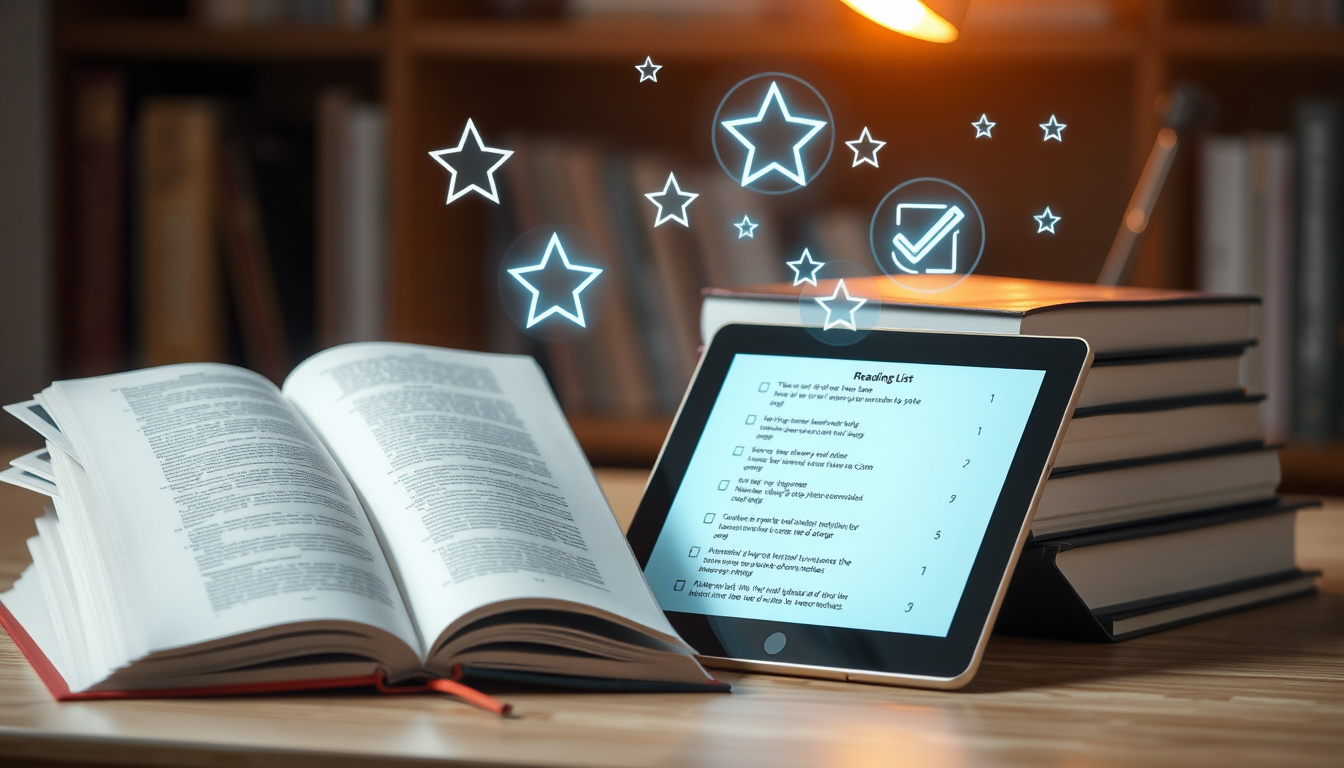
For anyone looking to read more in 2025, the digital landscape offers more options than ever. From vast free libraries to sophisticated tracking tools, it is possible to discover, read, and organize books entirely online. However, finding the right combination of free reading, tracking, challenges, and personalized recommendations often requires blending a few different platforms.
No single application currently combines free book reading, tracking, reading challenges, quizzes, and personalized suggestions in one native package. The most effective strategy involves pairing a dedicated tracker like Goodreads with a free reading platform such as Libby or ManyBooks.
This guide breaks down the best available tools for each need, explains how they work, and provides a clear path to building your own complete reading system.
Where can I read books online for free?
Several well-established platforms offer free access to millions of books. The choice depends on whether you need the latest bestsellers, classic literature, or children’s books.
Top platforms: Open Library, ManyBooks, Oxford Owl (kids)
Use Goodreads app or manual spreadsheet / journal
Try the ‘Books Read Quiz’ or Goodreads recommendation engine
ManyBooks, Open Library, and Kindle app allow downloads
Key Insights on Free Online Reading
- Free online reading is abundant: Open Library (3M+ titles), ManyBooks (50K+), and Oxford Owl (curated children’s library) cover most user needs without cost.
- Book tracking is easiest with Goodreads: its reading challenge feature and community reviews make it the default choice, but manual trackers (spreadsheets, apps) exist as alternatives.
- Personalized book recommendations are moving toward interactive quizzes and AI-based tools; the ‘books read quiz’ is a growing trend.
- Offline reading is supported by most free platforms (eBooks in PDF/EPUB), but users often don’t know how to enable it.
| Feature Needed | Best App Choice | Key Details |
|---|---|---|
| Tracking & Challenges | Goodreads | Fully free with no limits; offers the industry-standard annual Reading Challenge to set book goals (source) |
| Personalized Suggestions | The StoryGraph | Uses AI for mood-based discovery and deeper stats (source) |
| Free Books Online | Libby (by OverDrive) | Connects to your local library to borrow free ebooks and audiobooks (source) |
| Free Classic Books | Project Gutenberg | Provides 60,000+ free ebooks; ideal for classics like Austen and Dickens (source) |
| Quizzes | Not Native | Most dedicated tracker apps do not include built-in book quizzes (source) |
| Most popular free library | Open Library – 3M+ books, free to borrow and read |
| Biggest book tracking community | Goodreads – 90M+ members, 2.6B+ books added |
| Best free children’s library | Oxford Owl – age 3-11, with reading levels |
| Largest collection of free novels (adult) | ManyBooks – 50K+ free eBooks |
| Top offline reading capability | ManyBooks & Open Library – download PDF/EPUB |
How can I track books I’ve read?
The most widely used tool for tracking books is Goodreads. Its annual Reading Challenge allows users to set a specific number of books to read and monitor progress. The platform offers shelves for Want to Read, Currently Reading, and Read, along with mood discovery and progress tracking.
Goodreads is 100% free with no paywalled features or limits on logged books. It also provides personalized recommendations based on past reads and community reviews. However, it does not include built-in book quizzes.
Alternatives for Book Tracking
Several alternatives exist for those who want more detailed analytics or a different interface. The StoryGraph uses advanced algorithms for personalized, mood-based recommendations and generates detailed statistical graphics. It offers a robust free tier covering basics, though some migration features cost extra. Like Goodreads, it lacks a native quiz feature.
Bookwise is a forward-looking option with genuine AI capabilities included in the free tier for discovery and suggestions. It offers a clean interface with solid stats and mood discovery. For those who prefer manual methods, a simple spreadsheet or reading journal works just as well.
Most dedicated book-tracking apps (Goodreads, StoryGraph, Bookly) do not include built-in book quizzes as a core feature. If quizzes are essential, you may need to use Wattpad or rely on external resources like BookRiot or First for Women for quiz content, while using Goodreads or StoryGraph for tracking.
How to Find a Book Recommendation Based on What You Like
Personalized book suggestions have become much more sophisticated. The StoryGraph stands out for its AI-driven mood-based recommendations, which go beyond simple genre matching. Goodreads also provides recommendations based on your reading history and community reviews.
The “books read quiz” is a growing trend. These interactive quizzes ask about your favorite genres, themes, and authors, then generate personalized suggestions. While no universal standard exists for these quizzes, they can be a fun way to discover new titles.
Can I read novels offline on my phone?
Yes, most major free reading platforms support offline access. ManyBooks offers EPUB, MOBI, PDF, and other formats that are compatible with most e-readers and phones. Users can download titles directly to their device for offline reading. Open Library also allows downloads of many titles in PDF and EPUB formats.
The Kindle app syncs with Goodreads for automatic tracking, making it a seamless option for those who already use Amazon’s ecosystem. Libby, which connects to your local library, also allows you to download borrowed books for offline reading.
Free eBooks for Children
For younger readers, Oxford Owl provides a free library of children’s eBooks for ages 3-11, organized by reading levels and series. The platform is free for all families globally, though content aligns with UK reading schemes. It is backed by Oxford University Press, making it a trusted educational resource.
Timeline of Digital Book Reading & Tracking
The evolution of digital reading and tracking has been rapid. Here are the key milestones:
- 2006 – Goodreads founded – social book tracking begins
- 2007 – Open Library launched by Internet Archive (free digital library)
- 2009 – ManyBooks starts offering free eBooks
- 2013 – Oxford Owl free eBook library goes live
- 2020 – Reading challenges become viral on social media; Goodreads users hit 90M+
- 2025 – AI-powered book recommendations and quizzes gain traction
What is certain and what remains unclear about free reading platforms?
| Established Information | Information That Remains Unclear |
|---|---|
| Open Library and ManyBooks legally offer free titles (public domain, indie, or licensed) | ‘Books Read Quiz’ results depend on quiz quality; no universal standard |
| ManyBooks and Open Library allow downloads for offline reading | Some titles may have limited format options for offline use |
| Goodreads provides reliable tracking and community reviews | Best books to read in life lists are subjective; vary by culture, age, and taste |
Why has digital reading become so popular?
The demand for books to read online reflects a shift toward digital-first reading habits. Platforms like Open Library and ManyBooks democratize access to literature, while Goodreads dominates tracking. The gap in personalized recommendations—especially quiz-based tools—presents an opportunity for content creators. Parents and educators rely on Oxford Owl for vetted children’s content. Offline reading remains a key requirement for mobile users with limited connectivity.
What do the major sources say?
Goodreads, with its 90 million members, remains the default choice for book tracking and community engagement. Open Library, operated by the Internet Archive, offers over 3 million titles for free borrowing. ManyBooks provides 50,000+ free eBooks with multiple format options. Oxford Owl, backed by Oxford University Press, offers a trusted children’s library.
“Goodreads offers shelves (Want to Read, Currently Reading, Read), mood discovery, and progress tracking.”
Bookwise App Blog
“The StoryGraph uses advanced algorithms for personalized, mood-based recommendations and generates detailed statistical graphics.”
First for Women
“Libby connects directly to your local library to borrow ebooks and audiobooks for free.”
Mashable
What is the best way to combine all these features?
To build a complete reading system, install Goodreads for tracking and challenges, use ManyBooks or Libby for free reading, and try The StoryGraph for AI-driven suggestions. For quizzes, external sites or general trivia apps remain the best option, as no major tracker currently integrates quizzes natively. Setting up a comfortable reading space can also enhance your experience—consider this Book Shelf guide for home organization ideas.
Frequently Asked Questions
Is it legal to read books for free on Open Library?
Yes, Open Library operates under controlled digital lending (CDL) principles and offers public domain titles as well.
Can I track my reading without using Goodreads?
Yes, you can use a simple spreadsheet, journal, or other apps like StoryGraph or Bookly.
What format are free eBooks on ManyBooks?
ManyBooks offers EPUB, MOBI, PDF, and others – compatible with most e-readers and phones.
Is Oxford Owl only for UK children?
No, it is free for all families globally, though content aligns with UK reading schemes.
How do I know which books are truly the best to read in life?
Lists vary, but consider sources like Goodreads Choice Awards, Pulitzer winners, and curated expert lists.
Can I read books from Goodreads directly in the app?
No, Goodreads is a tracking and community platform, not a reading app. You need to obtain books separately from Libby, ManyBooks, or a bookstore.
Do I need a library card to use Libby?
Yes, Libby requires a valid library card from a participating library to borrow ebooks and audiobooks.
Are there free audiobooks available?
Yes, Libby offers free audiobooks through your local library, and ManyBooks provides some free audiobooks as well.
How do I start a reading challenge on Goodreads?
Go to your Goodreads profile, click “Reading Challenge,” set your yearly goal, and start adding books you have read.
What is the Jane Austen connection to free reading?
Jane Austen’s works are in the public domain, meaning they are freely available on platforms like ManyBooks and Project Gutenberg. For more, see this Jane Austen biography.

Jack Thomas Clarke Thompson is a staff writer for PopCultureDaily.co.uk, covering entertainment news, film, television, streaming and celebrity culture. He works under Editor-in-Chief Harriet Winslow and Managing Editor Lucas Bennett, following the newsroom standards for sourcing, verification and fact-checking set out in our editorial policies.