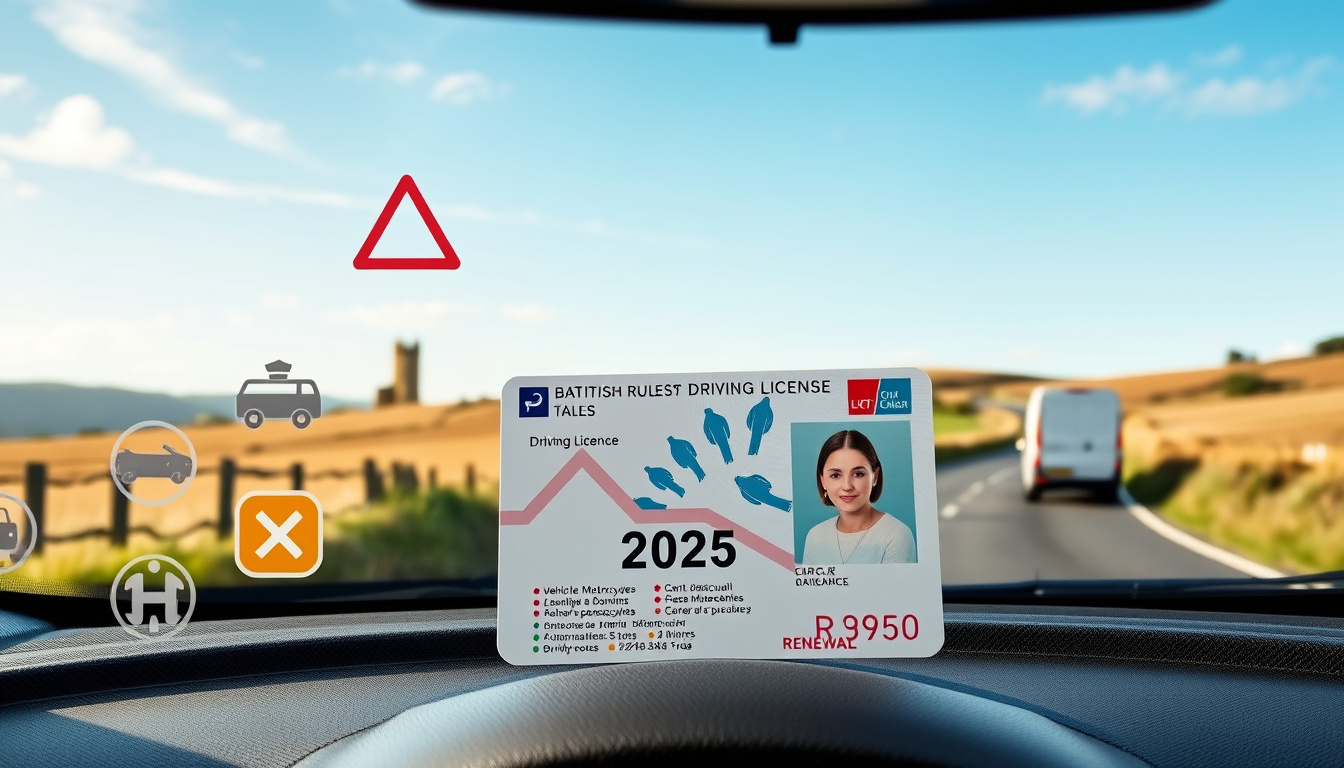
Understanding the rules governing UK driving licences is essential for every driver, whether you are renewing an existing licence, applying for your first one, or checking whether any updates apply to your current entitlements. The Driver and Vehicle Licensing Agency (DVLA) sets out clear guidelines that determine how long your licence remains valid, when renewal becomes mandatory, and what conditions apply across different age groups and licence categories. For 2025, the core framework remains consistent with previous years, though certain procedural aspects and category restrictions warrant closer attention to ensure full compliance.
Those who hold a full UK driving licence face specific obligations regarding renewal timing, documentation requirements, and the declaration of medical fitness. The transition from paper licences to photocard format, completed in 2015, means most drivers now hold the distinctive credit-card-style licence with a photograph and expiry date. However, some older drivers still hold paper licences, and the exchange process differs depending on your circumstances and age. The following guide breaks down the key rules, costs, and procedures applicable in 2025, drawing on official DVLA and GOV.UK guidance to provide a comprehensive overview.
Drivers should be aware that driving with an expired licence carries significant financial risk, with fines reaching up to £1,000. The DVLA sends renewal reminders approximately 90 days before the licence expiry date, giving drivers ample time to complete the necessary steps whether they choose to renew online, by post, or through a Post Office branch. The method selected affects both the cost and the processing time, making it worthwhile to understand the available options before beginning the renewal process.
How Do I Renew My UK Driving Licence in 2025?
The renewal process for UK driving licences offers three distinct pathways, each with different costs, requirements, and processing times. Online renewal through GOV.UK has become the preferred method for the majority of drivers, as it offers the fastest turnaround and avoids the need to visit a physical location. Those renewing online should ensure they have access to a valid UK passport, as the digital system can reuse the photograph already held by HM Passport Office. New users must register on the GOV.UK portal before completing their application.
To renew online, you will need your current driving licence, a valid UK passport, an email address, and details of addresses for the past three years. The system also accepts your National Insurance number, though this is optional. Once submitted, a new licence typically arrives within one week, making this the quickest available method.
Postal applications require completing either the D1 form for standard renewals or the D46P form, which the DVLA automatically sends to drivers aged 70 or over approximately 90 days before their licence expires. Applicants must include a passport photograph, their current licence, and a cheque or postal order for £17 made payable to the DVLA. Applications sent to DVLA Swansea, SA99 1DH, generally take around three weeks to process, significantly longer than the online route.
Post Office renewals provide an in-person option for those who prefer face-to-face assistance. The standard fee is £21.50, payable by card, and applicants must bring either their renewal reminder letter or their current driving licence. The Post Office staff handle the submission on the applicant’s behalf, though processing times remain similar to postal applications handled directly by the DVLA.
| Renewal Method | Cost | Processing Time | Key Requirements |
|---|---|---|---|
| Online via GOV.UK | Free (over 70); £14 (under 70) | Approximately 1 week | UK passport, email, 3 years of addresses |
| Postal (D1/D46P form) | £17 by cheque/postal order | Approximately 3 weeks | Passport photo, current licence, form to DVLA Swansea |
| Post Office | £21.50 (card payment) | Approximately 3 weeks | Reminder letter or current licence |
Drivers may continue driving while their renewal application is being processed, provided they meet certain conditions. You must have a valid licence at the time of application, remain medically fit to drive with your doctor’s support, and have submitted your application within the past year. However, if your application has been refused or revoked, or if you have been disqualified from driving, this entitlement does not apply. The DVLA encourages early renewal to avoid any gap between the expiry of the old licence and receipt of the new one.
For drivers aged 70 and over, the D46P renewal form arrives automatically, eliminating the need to request it separately. Those with a photocard licence should return their current licence along with the completed form, while paper licence holders must also provide a new passport photograph. The online renewal route remains unavailable to first-time over-70 applicants who have not previously registered on the GOV.UK system, making the postal route the primary option for this group until they establish an online account.
The No Entry Road Sign serves as a useful reminder that traffic regulations, including those governing driving licences, carry legal weight and must be observed. Just as drivers must respect physical road signs, they must also comply with the administrative requirements set by the DVLA to maintain their legal entitlement to drive.
What Are the Validity Periods for UK Driving Licences?
The validity period for a UK driving licence varies significantly depending on the driver’s age. For the majority of drivers under the age of 70, the standard renewal cycle is every 10 years. This means that once a driver passes their initial test and receives their full licence, they must renew it before reaching their 70th birthday, with each renewed licence remaining valid for a decade. The photocard licence displays the expiry date prominently, making it straightforward to track when renewal becomes necessary.
Renewal Requirements After Reaching 70
Upon reaching the age of 70, the renewal cycle changes substantially. Drivers aged 70 and over must renew their licence every three years rather than every decade. This more frequent renewal cycle reflects the increased emphasis on ensuring that older drivers remain medically fit to operate a vehicle safely. The DVLA sends the D46P form automatically approximately 90 days before the licence expires, though drivers can also request the form if it does not arrive in time.
For those who hold entitlements such as C1 (medium lorries) or D1 (minibuses), the renewal requirements become more complex. These specific categories must be renewed separately through the postal route, as the online system does not currently support their renewal. Motorcyclists should note that some category entitlements may be removed during the renewal process, particularly if the licence holder has not renewed their riding qualifications within the required timeframe.
Drivers can submit a renewal application if their licence has already expired or if it will expire within the next 90 days. This flexibility helps those who may have missed the reminder window or who need to ensure their licence remains current before a specific commitment, such as a holiday or work requirement. However, driving with an expired licence remains illegal and can result in fines of up to £1,000, making timely renewal advisable.
Automatic Expiry and the 90-Day Rule
Unlike younger drivers, whose licences remain valid until the expiry date shown on the photocard, drivers aged 70 and over face automatic expiry if they fail to renew. This means that if a driver over 70 does not complete the renewal process, their licence ceases to be valid at the end of the displayed expiry date, regardless of whether they have previously held it for decades. The three-year cycle and the requirement for fresh medical declarations ensure that the DVLA maintains up-to-date records of each driver’s fitness to drive as they age.
The ability to renew within a 90-day window before expiry applies to all drivers, including those over 70. This early renewal option prevents gaps in coverage and allows drivers to plan ahead, particularly if they anticipate being away or otherwise unavailable as the renewal date approaches. The DVLA’s reminder system, combined with the early application window, provides ample opportunity for drivers to maintain continuous licence validity.
What Are the Main UK Driving Licence Categories?
UK driving licences are organized into distinct categories, each indicating the types of vehicle the holder is entitled to drive. The categories range from mopeds and motorcycles through to heavy goods vehicles and minibuses, with additional entitlements for trailers and specific vehicle configurations. Understanding which categories apply to your licence is essential, as driving a vehicle in a category you are not entitled to can result in severe penalties, including fines and potential prosecution.
Photocard Versus Paper Licences
Since the full rollout completed in 2015, most UK driving licences take the form of a photocard, displaying the driver’s photograph, signature, and expiry date alongside security features that reduce the risk of fraud. Paper licences, issued before the photocard system was introduced, remain valid but must be exchanged for a photocard when renewing. The exchange process varies depending on whether the driver is within the standard 10-year renewal cycle or approaching the age of 70.
Drivers holding paper licences who wish to update to a photocard can do so through the post using the D1 application form, which requires a new passport photograph. The process is relatively straightforward, though it involves the same £17 fee applicable to standard postal renewals. Those who obtained their licence after 1976 and hold a valid GB licence may be eligible to drive during the application process if they meet the medical fitness requirements and have not been disqualified.
Category Restrictions and Online Renewal Limits
Not all driving licence categories can be renewed through the online portal. The GOV.UK driving licence categories page provides detailed information on which entitlements fall outside the online renewal system. Specifically, C1 vehicles (medium-sized lorries with a weight between 3.5 and 7.5 tonnes) and D1 vehicles (minibuses with 9 to 16 seats, excluding the driver) require postal renewal. This restriction means that drivers who hold these categories must use the D1 paper application rather than the online service.
The restriction on online renewal for C1 and D1 categories relates to additional medical and proficiency requirements that must be verified before these entitlements can be extended. While standard car and motorcycle renewals primarily involve identity verification and medical self-declaration, the heavier vehicle categories require checks that the online system cannot currently process. Drivers who need to maintain these entitlements should factor the longer processing time into their renewal planning.
Some drivers may find that certain entitlements are removed during the renewal process. This occurs most commonly with motorcycling categories if the holder has not renewed their riding qualifications, and with larger vehicle categories such as C1 and D1 if the appropriate checks cannot be completed. Drivers concerned about losing specific category entitlements should contact the DVLA directly before submitting their renewal application to clarify their position.
Provisional Licence Rules
Provisional driving licences allow learners to drive under supervision while preparing for their driving test. The rules governing provisional entitlements include restrictions on the types of vehicles that can be driven and the conditions under which driving is permitted. Those who held a provisional licence and wish to upgrade to a full licence must pass both the theory and practical tests in the relevant category.
Provisional licence holders who are renewing their entitlement can do so if the previous licence remained valid. However, driving on a provisional licence after a full licence has been obtained is not permitted, and those who allow their full licence to lapse while relying on provisional status may find themselves unable to drive legally. The provisional licence is primarily a learning tool, not a substitute for a full, current driving licence.
Drivers aged 70 and over may hold provisional entitlements on their licence, particularly if they are learning to drive a new category such as a large vehicle or minibus. The same medical fitness requirements apply, and the DVLA may request additional documentation or medical evidence before confirming entitlement to these categories. The combination of age-related renewal requirements and specific category restrictions means that older drivers seeking to add new entitlements should begin the process well in advance of their intended start date for driving.
What Medical Rules Apply to UK Driving Licences?
Medical fitness forms a cornerstone of UK driving licence eligibility, with all applicants required to self-declare their medical condition status as part of the renewal process. This self-declaration does not require a full medical examination for standard renewals but does obligate drivers to consider whether any medical conditions they have might affect their ability to drive safely. Conditions that must be declared include diabetes, epilepsy, heart conditions, and any neurological disorders that could impair driving ability.
Self-Declaration Requirements
When renewing a UK driving licence, drivers must confirm that they have no medical conditions that would prevent them from driving. This declaration is a legal statement, and providing false information can result in prosecution. The DVLA provides detailed guidance on which medical conditions affect driving, helping drivers understand whether their specific circumstances require formal notification to the agency.
For most standard renewals, the self-declaration process is sufficient provided no new conditions have developed since the previous licence was issued. However, if a driver has developed a notifiable condition or if the DVLA has previously requested medical information, additional documentation may be required. In such cases, processing times extend beyond the standard three weeks, and drivers should factor this into their planning to avoid driving with an expired licence while awaiting a decision.
If your renewal involves medical checks that take longer than the standard processing time, you may continue driving provided your doctor confirms you remain medically fit and your previous licence was valid when you submitted the application. Keep a note of your application reference and any correspondence from the DVLA, as this documentation can help if questions arise about your entitlement during the processing period.
Tighter Rules for Drivers Over 70
Drivers aged 70 and over face slightly more stringent medical requirements than younger drivers, reflecting the statistical increase in certain medical conditions that can affect driving ability in older age groups. The three-year renewal cycle for this age group ensures that medical declarations remain current and that the DVLA can take action if a driver’s health deteriorates significantly between renewals.
Rumours suggesting that drivers aged 55 or over should renew every five years, or that broad changes to medical requirements are imminent, remain unsubstantiated according to current official guidance. While the DVLA continuously reviews its policies and aligns with international standards where appropriate, no such changes had been announced as of early 2025. Drivers who encounter conflicting information should refer directly to the official GOV.UK renewal guidance for confirmation.
Conditions Requiring Specific Notification
Certain medical conditions require specific notification to the DVLA regardless of the driver’s age or renewal cycle. Epilepsy, for example, requires the driver to have been seizure-free for a specified period before holding a licence, and any recurrence must be reported immediately. Similarly, diabetes treated with insulin requires notification and may result in restrictions being added to the licence, such as requiring the driver to carry glucose and monitor their condition while driving.
Cardiovascular conditions, including heart disease and circulation problems, may require specialist reports depending on their severity and the impact on driving ability. Drivers with prosthetic limbs, significant vision impairment, or hearing loss that affects their ability to respond to road situations may also face additional requirements. The key principle is that any condition that could cause sudden incapacity, significant impaired judgement, or reduced physical capability must be declared to allow the DVLA to assess whether driving remains safe.
The Admiral Insurance Phone Number provides a useful resource for drivers seeking to understand how their medical status might affect their vehicle insurance. While insurance requirements are separate from DVLA licensing rules, understanding both aspects helps drivers maintain complete legal compliance and avoid gaps in coverage that could prove costly in the event of an incident.
Are There Any New Driving Licence Rules for 2025?
As of 2025, no major sweeping changes to UK driving licence rules have been introduced beyond the existing framework governing renewals, categories, and medical fitness. The core structure of 10-year renewals for drivers under 70, three-year renewals for those over 70, and the photocard-only system for licences issued since 2015 remains firmly in place. The DVLA continues to operate its established processes for online, postal, and Post Office renewals, with costs holding steady at the levels introduced in previous years.
Digital licence pilots have been discussed as part of broader government initiatives to modernize administrative processes, but no fully operational digital driving licence system had been rolled out nationally as of early 2025. Drivers should monitor Department for Transport announcements for updates on any future changes to the format or administration of driving licences. Any transition to digital formats would likely maintain the current rules around validity periods and renewal requirements.
Post-Brexit Category Alignment
Following the UK’s departure from the European Union, alignment with EU directives on driving licence categories has been reviewed. The changes that affect C1 and D1 categories, including the removal of certain entitlements during renewal if appropriate checks cannot be completed, stem from this ongoing review process. Drivers who previously held these categories without issue should verify their current entitlements before driving larger vehicles, as the rules governing these categories have undergone subtle but important adjustments.
The exchange of foreign driving licences for UK equivalents also falls under these post-Brexit arrangements. Drivers who obtained their licence in an EU or EEA country may be able to exchange it for a UK licence under specific circumstances, while those with non-EU licences face different procedures that may include theory and practical tests. The DVLA provides detailed guidance on exchanging a foreign licence for a UK one, and those affected should consult this guidance before assuming their existing licence provides full UK entitlement.
Drivers who hold specialist categories or who have specific medical conditions should check the DVLA website periodically for any changes to renewal requirements or entitlement rules. While major changes are typically announced well in advance, staying informed helps avoid unexpected issues when renewal time arrives.
When Can I Drive During the Renewal Process?
Many drivers worry about whether they can continue driving while their renewal application is being processed. The rules permit continued driving provided several conditions are met simultaneously, protecting drivers who have submitted their application in good time from being unable to drive during the processing period.
- The previous licence was valid at the time of application submission
- The driver remains medically fit to drive, with doctor confirmation if required
- The application was submitted within the past 12 months
- The driver has not had a previous application refused or revoked
- The driver has not been disqualified from driving, particularly after 1 June 2013 for high-risk offences
The one-year window for driving during renewal processing covers most standard situations, where processing completes within three weeks to a month. However, cases involving medical checks or additional documentation may take longer, and drivers in this situation should maintain regular contact with the DVLA to confirm their application status. Driving after the one-year window has passed without receiving a new licence could expose the driver to the £1,000 fine applicable to expired licence driving.
Provisional licence holders who are upgrading face different considerations. If a full provisional entitlement was held before applying for the full licence, driving may continue under the provisional conditions during processing. However, drivers who hold a full licence but have allowed it to expire while relying on provisional status for driving will not be covered and should not drive until the full licence is renewed.
What Is Confirmed and What Remains Unclear About UK Driving Licence Rules?
Transparency about what is definitively known and what remains subject to change helps drivers make informed decisions about their licence management. The following summary separates established facts from areas where further clarification or official updates may emerge.
UK driving licence renewal rules for 2025 are well-established: online renewal via GOV.UK costs £14 for drivers under 70 and is free for those over 70, with processing taking approximately one week. Postal renewals cost £17 and take around three weeks, while Post Office renewals cost £21.50. Standard validity periods remain 10 years for under-70s and 3 years for over-70s, with all renewals requiring medical self-declaration. Photocard exchange is mandatory for paper licence holders, and C1/D1 categories must be renewed by post.
The timeline for any national digital driving licence rollout remains unclear, with pilots discussed but no firm implementation date announced. Category alignment changes following Brexit continue to be implemented gradually, and drivers with older entitlements may find their specific situation requires individual clarification from the DVLA. Any future changes to medical requirements for drivers aged 55 and over, beyond the existing over-70 rules, have not been confirmed.
Why UK Driving Licence Rules Exist and How They Have Evolved
The framework of UK driving licence regulation exists primarily to ensure road safety for all users, from pedestrians and cyclists to other drivers and passengers. By setting standards for who can drive, what vehicles they can operate, and how regularly their fitness to drive is assessed, the DVLA maintains a baseline of competence across the driving population. The evolution from paper licences to photocards, completed in 2015, introduced improved security features and made expiry dates immediately visible on the document itself.
The introduction of regular renewal cycles, particularly the three-year requirement for drivers over 70, reflects statistical evidence that certain medical conditions become more prevalent with age and that driving ability can be affected by factors that develop gradually. Rather than testing older drivers more frequently with mandatory examinations, the self-declaration system places responsibility on drivers to assess their own fitness and report any changes that might impair their ability to drive safely.
Category restrictions, particularly those requiring postal renewal for C1 and D1 entitlements, align with European standards for heavy vehicle operation while also ensuring that specialist medical and proficiency checks are completed before these entitlements are extended. The rules governing provisional licences, meanwhile, ensure that new drivers build their skills under appropriate supervision before gaining full independence on the roads.
Official Sources for UK Driving Licence Information
The Driver and Vehicle Licensing Agency maintains primary responsibility for driving licence administration in Great Britain. Their official guidance, published through the GOV.UK portal, provides the most authoritative information on renewal procedures, validity periods, medical requirements, and category restrictions. Drivers should treat unofficial sources, including forums and social media posts, with appropriate caution, as information in these venues may be outdated, inaccurate, or applicable only to specific circumstances not matching the reader’s situation.
The DVLA advises all drivers to renew their licence before the expiry date shown on the photocard and to contact the agency directly if they have not received their renewal reminder at least 60 days before that date. Early application helps ensure continuous licence validity and avoids the risk of fines for driving with an expired document.
The official GOV.UK renewal page provides step-by-step guidance for online applications, including registration requirements for new users and information on what to do if you cannot use the online service. For postal applications, the D1 and D46P forms are available from Post Offices and can be requested by post from the DVLA if needed.
Summary and Key Takeaways
UK driving licence rules for 2025 centre on a clear framework of renewal requirements that vary by age: every 10 years for drivers under 70 and every 3 years for those over 70. Online renewal via GOV.UK remains the quickest and most cost-effective method for most drivers, with fees of £14 for under-70s and free for over-70s. Postal and Post Office options provide alternatives for those who prefer non-digital application methods, with costs ranging from £17 to £21.50 depending on the chosen channel.
Medical self-declaration is required for all renewals, with slightly tighter requirements for drivers over 70 reflecting age-related health considerations. Specific licence categories, particularly C1 and D1, must be renewed by post and may be subject to removal during the renewal process if appropriate checks cannot be completed. The transition to digital driving licences remains under discussion but has not been implemented nationally as of 2025.
Drivers should act on renewal reminders promptly to avoid the £1,000 fine associated with driving on an expired licence. The No Entry Road Sign principle applies equally to administrative compliance: ignoring the rules carries consequences. By understanding the current requirements and applying early, drivers can maintain their entitlement to drive without interruption or penalty.
Frequently Asked Questions
What should I do if I have lost my UK driving licence?
If your licence is lost or stolen, you should report it to the DVLA and apply for a replacement. The online service through GOV.UK allows you to request a new licence if you are a GB resident and meet the relevant criteria. A replacement fee may apply, and the new licence will show the same details as the original including the original expiry date.
Can I legally drive on an expired UK driving licence?
No, driving with an expired licence is illegal and can result in a fine of up to £1,000. You must renew before the expiry date shown on your photocard or apply within the 90-day window before expiry if you have not yet renewed. Driving during the application process is permitted only under specific conditions.
How long does it take to receive a new driving licence after renewal?
Online renewals typically result in a new licence arriving within one week. Postal and Post Office renewals take approximately three weeks, though this extends if medical checks are required. Applying early helps avoid a gap between the expiry of your old licence and the arrival of your new one.
Do I need to renew my driving licence at 50 in the UK?
No, there is no mandatory renewal requirement at age 50. The standard 10-year cycle continues until age 70, when the frequency increases to every three years. Rumours of a 55-year renewal requirement are not supported by current official guidance.
Can I exchange my paper driving licence for a photocard online?
You can exchange a paper licence for a photocard online if you are under 70 and meet the standard online renewal requirements, including having a valid UK passport. If you are over 70 and have not previously registered with the online service, you will need to use the postal route with the D46P form.
What happens if I develop a medical condition after renewing my licence?
You must notify the DVLA of any new medical condition that could affect your driving ability, regardless of when you last renewed your licence. Failure to report a notifiable condition is a criminal offence. The DVLA will assess your situation and may add restrictions to your licence or require additional medical evidence before you can continue driving.
Are there any changes to driving licence rules for 2025 I should be aware of?
No major changes to UK driving licence rules were announced for 2025 beyond the established renewal procedures and costs. Digital licence pilots continue to be discussed, but no national rollout has been implemented. Drivers should check the DVLA and GOV.UK websites periodically for any updates to category restrictions or renewal requirements.
Can I drive during the renewal process if I am over 70?
Yes, you can continue driving during the renewal process if your previous licence was valid when you applied, you remain medically fit to drive, and your application is less than one year old. Ensure you have your doctor’s confirmation if your renewal involves medical checks, and keep your application reference number to hand in case of queries.

Jack Thomas Clarke Thompson is a staff writer for PopCultureDaily.co.uk, covering entertainment news, film, television, streaming and celebrity culture. He works under Editor-in-Chief Harriet Winslow and Managing Editor Lucas Bennett, following the newsroom standards for sourcing, verification and fact-checking set out in our editorial policies.