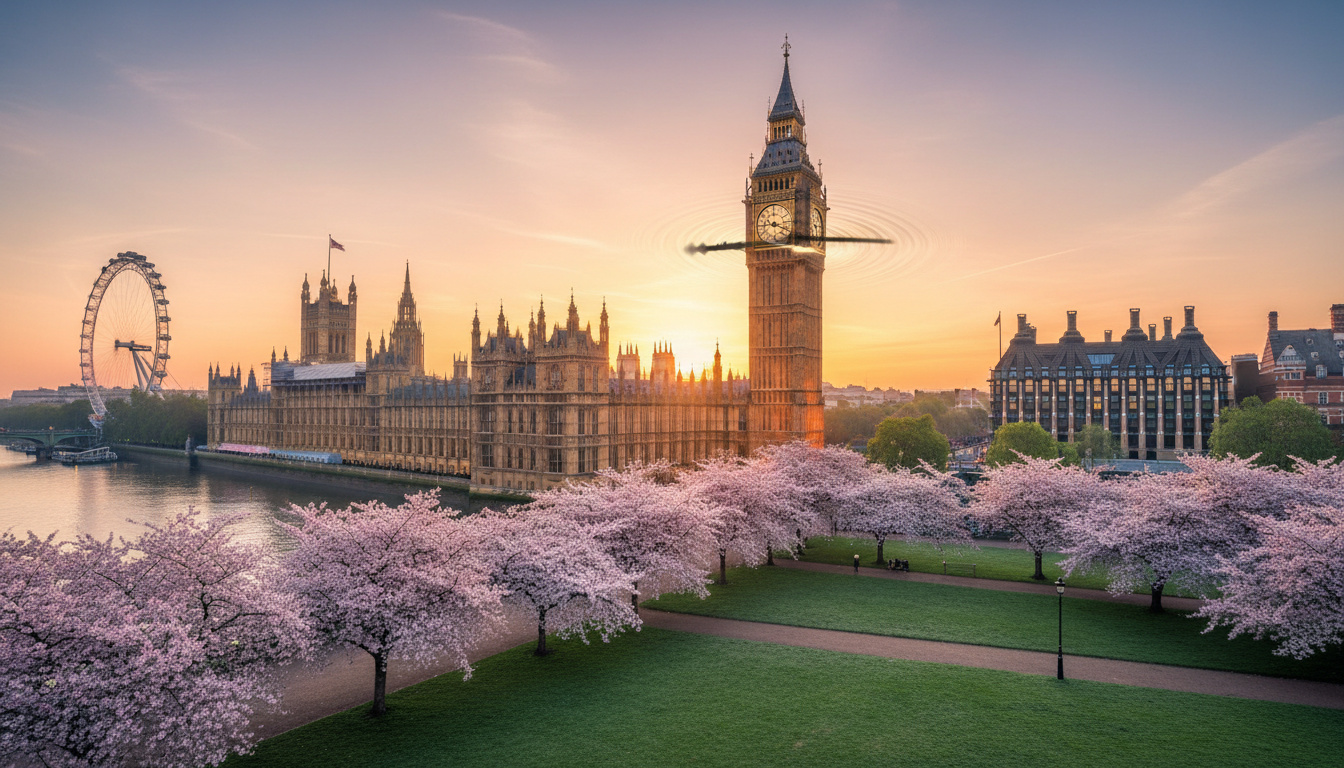
British Summer Time begins at 01:00 GMT on Sunday, 30 March 2025, when clocks across the United Kingdom advance by one hour to mark the start of longer evenings. This transition from Greenwich Mean Time to BST affects millions of households and transport networks simultaneously, with sunset in London shifting from approximately 6:29 pm to 7:30 pm on the day of change.
While the United Kingdom follows the last-Sunday-in-March protocol, international schedules diverge significantly. The United States and Canada adjust their clocks three weeks earlier, while southern hemisphere nations operate on entirely reversed seasonal calendars. These variations create complex logistical challenges for international travel and cross-border business operations during the transition periods.
Preparation remains essential despite the ubiquity of internet-connected devices that update automatically. Analog timepieces, manually set appliances, and certain industrial systems require physical intervention to maintain accuracy. Understanding the precise mechanics of the 2025 changes helps mitigate the documented health impacts associated with circadian disruption.
When Do the Clocks Go Forward in 2025?
The definitive moment occurs at 01:00 on Sunday, 30 March 2025, when digital networks synchronise devices across the United Kingdom. Official government sources confirm this date aligns with the EU-harmonised schedule established in 1995, maintaining post-Brexit synchronisation with European neighbours.
2025 Clock Change Overview
| UK Date: Sunday, 30 March 2025 | Time: 01:00 GMT → 02:00 BST | Duration: Until 26 October 2025 | Scope: UK, EU, and select worldwide |
Critical Information Points
- Mechanical clocks and watches require manual advancement by exactly sixty minutes
- The transition effectively eliminates one hour of sleep duration for the population
- Sunday selection specifically minimises disruption to commercial and educational schedules
- European Union states maintain identical transition dates despite Brexit
- Sunset times extend by approximately one hour immediately following the change
- The mnemonic “spring forward, fall back” indicates seasonal adjustment direction
- Early March conditions in northern England can be verified through Weather Newcastle upon Tyne – Late March Conditions and Forecast
Global Date Comparison
| Region | Forward Date | Local Time | Return Date |
|---|---|---|---|
| United Kingdom | 30 March 2025 | 01:00 GMT | 26 October 2025 |
| European Union | 30 March 2025 | 02:00 CET | 26 October 2025 |
| United States | 9 March 2025 | 02:00 Local | 2 November 2025 |
| Canada | 9 March 2025 | 02:00 Local | 2 November 2025 |
| Australia (NSW) | 5 October 2025 | 02:00 Local | 6 April 2026 |
| Japan | No DST observed year-round | ||
| Russia | Abandoned DST in 2014 | ||
Scientific analysis confirms the UK transition provides lighter evenings at the cost of darker mornings, a trade-off originally designed for wartime energy conservation but now questioned regarding modern efficiency.
Which Countries Observe Clock Changes in 2025?
Approximately seventy nations observe some form of daylight saving time, though scheduling varies dramatically by hemisphere and political jurisdiction. Historical records indicate the practice remains concentrated in North America, Europe, and parts of the Middle East, while major economies including China, India, and Japan maintain consistent time zones throughout the year.
Europe and Post-Brexit Alignment
The United Kingdom continues synchronising with European Union member states despite political separation. Transport authorities note this alignment prevents complications for cross-channel rail services, aviation schedules, and international financial trading. The 1995 EU directive establishing last-Sunday transitions remains in force for both jurisdictions.
North American Variations
The United States and Canada advance clocks on 9 March 2025, three weeks ahead of European schedules. Arizona and Hawaii maintain standard time year-round, creating internal timezone variations within US borders. Canadian exceptions include Saskatchewan and portions of British Columbia and Quebec.
Southern Hemisphere Patterns
Southern hemisphere nations including Australia and New Zealand observe daylight saving time during their spring and summer months, approximately September through April. This creates a six-month offset with northern hemisphere schedules, meaning Australia begins DST in October 2025 while the UK concludes its summer time period.
Comparative analysis reveals that Queensland, the Northern Territory, and Western Australia do not participate in DST, despite New South Wales, Victoria, and South Australia maintaining the practice.
Nations That Rejected DST
Russia abandoned permanent seasonal changes in 2014, adopting year-round standard time after previous experiments caused widespread dissatisfaction. China, India, and most African and South American nations never adopted the system, citing minimal energy benefits and significant circadian disruption costs.
Why Do Clocks Go Forward and What Are the Effects?
The United Kingdom first adopted British Summer Time in 1916, following Germany’s wartime implementation designed to conserve coal resources during the First World War. Royal Museums Greenwich documents the original proposal by William Willett in 1907, which advocated for extended evening daylight to support agricultural and recreational activities.
Documented Health Consequences
Research indicates the spring forward transition correlates with increased cardiovascular events, workplace accidents, and traffic collisions during the subsequent week. The acute sleep deprivation affects cognitive function and mood regulation, particularly among shift workers and individuals with existing sleep disorders.
Medical consensus acknowledges that circadian misalignment strains metabolic and cardiovascular systems, with studies showing heightened risks of heart attacks and strokes immediately following the March transition. The one-hour deficit accumulates with existing sleep debt in modern populations.
Modern Economic and Social Debates
Contemporary analysis questions the original energy conservation rationale, noting that modern air conditioning and heating systems offset theoretical gains from extended evening daylight. Legislative proposals to adopt permanent DST or permanent standard time remain under consideration in multiple jurisdictions, though no definitive policy changes are confirmed for 2025.
When Do Clocks Go Back in 2025?
British Summer Time concludes at 02:00 on Sunday, 26 October 2025, when clocks retreat one hour to 01:00 GMT. Academic sources confirm this return to Greenwich Mean Time provides an additional hour of sleep while initiating darker evening conditions throughout the winter months.
The October transition requires vigilance regarding vehicle lighting systems and outdoor safety equipment. Evening commutes become noticeably darker immediately after 26 October, necessitating reflective gear for pedestrians and cyclists alongside routine automobile headlight checks.
Energy distribution networks note that the autumn change increases evening electricity demand as artificial lighting requirements intensify. The seven-month BST period represents the standard duration for British Summer Time implementation.
What Is the Complete 2025 Daylight Saving Timeline?
- : United States and Canada advance clocks (DST begins)
- : United Kingdom and European Union spring forward (BST/CEST begins)
- : Australian jurisdictions including New South Wales begin daylight saving
- : UK and EU return to standard time
- : North America concludes daylight saving period
Travellers should consult Weather in Nottingham 10 Days – Detailed Forecast from Met Office when planning late October activities affected by the time transition.
What Is Definite and Uncertain About Future Changes?
| Established Information | Information Remaining Unclear |
|---|---|
| UK dates for 2025 are fixed by statute: 30 March forward, 26 October back | European Union proposals to abolish seasonal changes remain under parliamentary review without implementation dates |
| United States will observe DST from 9 March through 2 November 2025 in participating states | Legislative efforts to adopt permanent DST or standard time lack cross-party agreement in multiple jurisdictions |
| Post-Brexit UK continues synchronising with EU time changes to maintain transport and trading efficiency | Long-term health impact studies may influence future policy revisions if causal links strengthen |
| Russia, China, and India maintain definitive positions against DST implementation | Global coordination mechanisms for potential future abolition remain undefined |
How Did British Summer Time Originate?
William Willett’s 1907 pamphlet “The Waste of Daylight” first proposed advancing clocks to capture unused morning sunlight for evening activities. Germany implemented the system first in 1916 to conserve wartime resources, prompting immediate British adoption. The original 1916 legislation established the temporary nature of BST, though it has become an annual fixture with suspension periods only during the Second World War and the 1968-1971 experimental permanent BST trial.
Contemporary justification shifted from pure energy conservation towards quality-of-life metrics and road safety arguments. However, recent research challenges both premises, suggesting that the economic and health costs of circadian disruption may outweigh marginal energy savings in modern, electrically-dependent societies.
What Do Official Sources Confirm About the Changes?
In the UK, clocks go forward one hour at 1:00am on Sunday, 30 March 2025, switching from Greenwich Mean Time (GMT) to British Summer Time (BST).
— UK Government Digital Service
The change occurs early Sunday morning to minimize disruption to schools and businesses.
— Royal Automobile Club
How Should You Prepare for March 2025?
Mark Sunday, 30 March 2025, as the definitive date for advancing timepieces by one hour at 01:00 GMT. Verify automatic updates on smartphones and networked devices while manually adjusting analog clocks, microwave ovens, and vehicle displays. Consider circadian adjustment strategies including gradual bedtime shifts during the preceding week to mitigate sleep disruption effects.
Frequently Asked Questions
Will my smartphone update automatically?
Most internet-connected devices update automatically at 01:00 GMT. However, manually set devices and traditional analog clocks require physical adjustment. Verify your settings support automatic updates.
Why was Sunday chosen for time changes?
Sunday minimises disruption to commercial operations and schools. The weekend timing allows gradual adjustment without affecting weekday commutes or business hours.
What does “spring forward, fall back” mean?
This mnemonic indicates direction: in spring (March), clocks advance one hour. In autumn (October), clocks retreat one hour to Greenwich Mean Time.
Do all European countries follow UK dates?
Most EU states synchronise due to the 1995 directive. However, Iceland, Belarus, and Russia do not participate in daylight saving time changes.
How can I reduce sleep disruption?
Shift bedtime earlier by fifteen minutes for four nights before 30 March. Seek morning sunlight and avoid blue light before bed to support circadian adjustment.
Which UK territories do not observe BST?
The Channel Islands and Isle of Man follow UK changes. Overseas territories including the Cayman Islands and Bermuda maintain standard time year-round without seasonal adjustments.

Jack Thomas Clarke Thompson is a staff writer for PopCultureDaily.co.uk, covering entertainment news, film, television, streaming and celebrity culture. He works under Editor-in-Chief Harriet Winslow and Managing Editor Lucas Bennett, following the newsroom standards for sourcing, verification and fact-checking set out in our editorial policies.