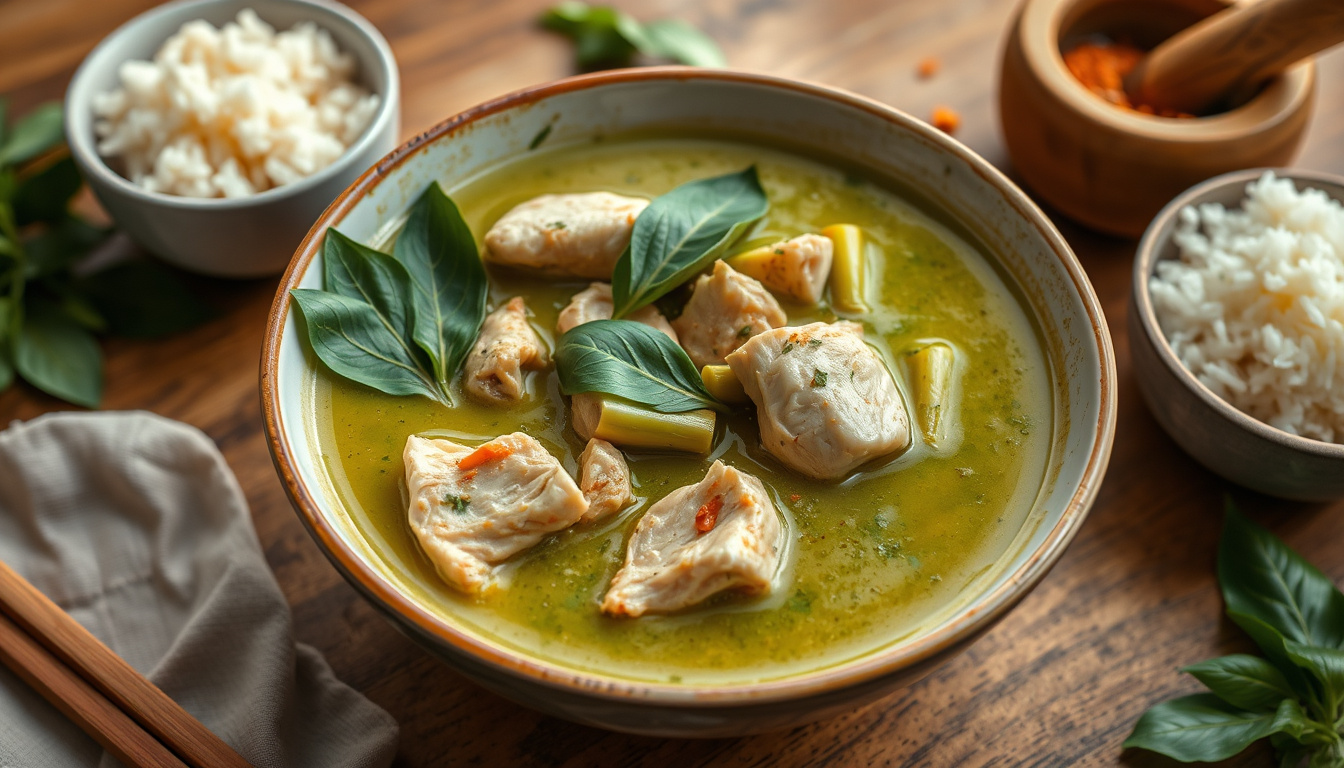
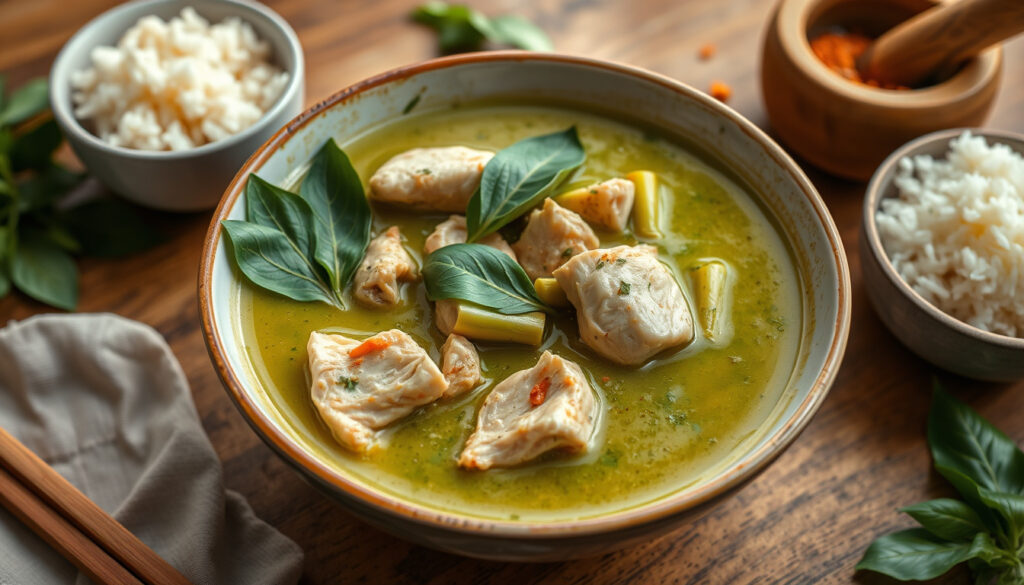
Essential Thai Green Curry Ingredients: What You Need
Key insights for a successful Thai green curry
- Freshness of curry paste is the #1 factor for authentic flavour. Homemade paste or high-quality store-bought paste (like Mae Ploy) delivers far better taste than generic supermarket brands.
- Don’t boil the coconut milk – simmer gently. High heat can cause the coconut milk to separate, producing a grainy texture. Use medium-low heat for best results.
- Fish sauce is essential for umami, but can be replaced with soy sauce for a vegan version. Do not omit the fish sauce entirely; it provides the savory depth that defines authentic Thai green curry.
- Vegetables should be added in order of cooking time. Hard vegetables like potatoes go in first, then beans, and finally leafy greens just before serving to avoid mushiness.
| Category | Detail |
|---|---|
| Origin | Central Thailand, influenced by Chinese and Indian curry traditions |
| Main Flavour Profile | Creamy, spicy, salty, sweet, and herbal (cilantro, basil, lime) |
| Typical Protein | Chicken, beef, pork, tofu, or shrimp |
| Calories (per serving) | ~350–500 kcal (depending on coconut milk and protein) |
| Common Vegetables | Thai eggplant, bamboo shoots, green beans, bell pepper, basil |
| Store-bought Paste Brands | Mae Ploy, Thai Kitchen, Aroy-D |
| Serving Suggestion | Over jasmine rice or with rice noodles |
How to Make an Authentic Thai Green Curry from Scratch
Authenticity in Thai green curry comes from using fresh aromatics and building the paste from scratch. Chef Pailin Chongchitnant of Hot Thai Kitchen states, “The quality of the curry paste is the single most important factor that determines whether your green curry will be just okay or mind-blowingly good.” The traditional paste includes green bird’s eye chilies, galangal, lemongrass, makrut lime leaves, shrimp paste, and coriander root.
How do I make Thai green curry paste at home?
A vegan-friendly homemade paste can be made without shrimp paste by using a combination of green chilies, garlic, shallots, lemongrass, ginger or galangal, fresh coriander stalks, Thai basil, makrut lime leaves or lime zest, coriander seed, cumin seed, pepper, salt, and oil. Toast whole spices first, then blend everything to a thick paste. A splash of oil helps the mixture process smoothly. Taste and adjust with salt, lime, or sugar.
What makes Thai green curry authentic?
The defining characteristics are a vivid green colour from fresh green chilies and herbs, a creamy texture from good coconut milk, and a balanced seasoning of salty, sweet, sour, and spicy. Traditional versions often include pea eggplants and Thai basil. The paste should be fried in a little oil before adding coconut milk to release its full aroma. David Thompson, author of Thai Food, describes it as “one of the great dishes of Thailand – it should be sweet, salty, and sour, with the fragrance of fresh herbs.”
Always simmer the curry gently after adding coconut milk. Boiling can cause the coconut milk to split and form a grainy texture. Medium-low heat keeps the sauce smooth and creamy.
Easy Thai Green Chicken Curry: 30-Minute Recipe
For a quick weeknight dinner, store-bought paste combined with extra aromatics delivers satisfying results in under half an hour. This method is endorsed by multiple recipe sources as a reliable shortcut.
How do I make a quick Thai green curry with store-bought paste?
Sauté a few tablespoons of quality paste (Mae Ploy or Aroy-D) in oil with extra minced garlic, ginger, and lemongrass. Add thick coconut milk and bring to a gentle simmer. Add chicken pieces and vegetables such as bell pepper, green beans, and bamboo shoots. Cook until the chicken is done, then season with fish sauce, a little sugar, and lime juice. Finish with Thai basil. Total time: about 25–30 minutes.
How do I adapt Thai green curry for UK ingredients?
UK shoppers can find most Thai ingredients in large supermarkets with world-food aisles, Asian grocery stores, or frozen sections. Makrut lime leaves are increasingly available fresh or frozen. If unavailable, use lime zest. Thai basil can be swapped for regular basil mixed with a little mint. Galangal can be replaced with ginger. Green bird’s eye chilies, serranos, or jalapeños work instead of Thai green chilies. For the curry, use baby aubergines or courgette as substitutes for Thai eggplant.
How do I make Thai green curry for one person?
Scale down the recipe by using 1–2 tablespoons of paste, 200ml coconut milk, and a small handful of protein and vegetables. The method remains the same. Leftovers freeze well, though the texture of coconut milk may change slightly upon thawing. Reheat gently and stir in a splash of fresh coconut milk to restore creaminess.
Even when using store-bought paste, frying it with fresh garlic, ginger, and lemongrass dramatically improves the depth of flavour. This simple step is recommended by RecipeTin Eats and other reliable sources.
Vegetarian and Vegan Thai Green Curry: Simple Swaps
Vegetarian and vegan versions replace fish sauce and shrimp paste with plant-based alternatives while preserving the core flavour structure. The key is to boost umami with soy sauce, tamari, or a vegan fish sauce substitute.
Can I use tofu in Thai green curry?
Yes, firm or extra-firm tofu works well. Pan-fry it separately until golden, then add it to the curry near the end of cooking to avoid breaking. Tempeh and mushrooms are also good protein options. Chickpeas are less traditional but can be added for extra protein.
What vegetables are best for Thai green curry?
Traditional choices include Thai eggplant, bamboo shoots, green beans, snow peas, bell peppers, mushrooms, bok choy, and spinach. Hearty additions like sweet potato, pumpkin, cauliflower, and broccoli also hold up well. Add vegetables in order of cooking time – hard vegetables first, leafy greens last.
Many store-bought green curry pastes contain shrimp paste, which is not vegetarian or vegan. Always check the label. Brands like Thai Kitchen offer vegan versions, or you can make your own paste at home.
What Is the History of Thai Green Curry?
Green curry, known in Thai as gaeng keow wan, emerged as a staple of Thai royal cuisine in the early 1900s, influenced by Indian curry traditions but localised with fresh herbs and green chilies. It gained popularity in central Thailand by the 1930s–1940s. As Thai restaurants opened internationally in the 1970s, commercial paste production began, making the dish accessible worldwide. Today it remains one of the most recognised Thai dishes, with countless regional and Westernised adaptations.
- Early 1900s: Curry pastes (including green) emerge as a staple in Thai royal cuisine, influenced by Indian spices but localised with fresh herbs.
- 1930s–1940s: Green curry becomes widely popular in central Thailand; green colour comes from fresh green chilies and herbs.
- 1970s: Thai restaurants open internationally, introducing green curry to global audiences. Paste production shifts to commercial manufacturing.
- Present: Thai green curry is one of the most popular Thai dishes worldwide, with countless home-style and restaurant variations.
Certainty vs Uncertainty: Common Thai Green Curry Questions
| Question | Certainty | Explanation |
|---|---|---|
| Can I use any green curry paste? | High for taste difference; low for failure | Most store-bought pastes will work, but flavour strength varies. Start with less and adjust. |
| Can I substitute coconut milk with another milk? | Certain – not recommended | Coconut milk is irreplaceable for authentic texture and flavour. Light coconut milk is fine, but other milks (almond, cow) will drastically change the dish. |
| Can I make it less spicy? | Certain – yes | Use less paste, or add more coconut milk, sugar, or lime to balance heat. Be careful not to dilute other flavours. |
| Is it okay to freeze Thai green curry? | Moderate – texture may change | Coconut milk can separate upon thawing. Reheat gently while stirring, and add a splash of fresh coconut milk to restore creaminess. |
Regional Variations and Modern Adaptations
Authentic central Thai green curry uses fresh green bird’s eye chilies, kaffir lime leaves, galangal, lemongrass, and shrimp paste. It often includes pea eggplants and Thai basil. Westernised versions in the UK, US, and Australia tend to be sweeter, milder, and thicker, sometimes incorporating broccoli, carrots, and extra coconut cream. Vegetarian and vegan adaptations replace fish sauce with soy sauce or tamari and use tofu or seitan instead of chicken. Healthier twists use light coconut milk, increase the vegetable ratio, and reduce sugar. Regardless of the variation, the essential balance of salty, sweet, sour, and aromatic remains constant.
Expert Voices and Authoritative Sources
“The quality of the curry paste is the single most important factor that determines whether your green curry will be just okay or mind-blowingly good.”
Chef Pailin Chongchitnant, Hot Thai Kitchen
“Green curry is one of the great dishes of Thailand – it should be sweet, salty, and sour, with the fragrance of fresh herbs.”
David Thompson, Thai chef and author of ‘Thai Food’ – The Guardian
“This classic Thai dish is quick to make if you use a good-quality shop-bought paste, or you can make your own for a truly authentic flavour.”
BBC Food – Thai green curry guide
For further reading, the BBC Good Food green curry recipe, Serious Eats on the science of Thai curry, and the official Thai cuisine history page by the Government of Thailand provide additional authoritative context.
Beyond the Basics: Advanced Thai Green Curry Tips
Once you have mastered the basics, try making your own green curry paste using a mortar and pestle for the best texture. Experiment with different proteins – duck, fish balls, or jackfruit for a vegetarian twist. Pair with fermented condiments like prik nam pla to add a new dimension of flavour. Learn the art of ‘breaking’ coconut milk (the fried paste technique) for a richer, oilier curry. For kitchen equipment recommendations, see our Cuisinart Ice Cream Maker – UK Buyer’s Guide 2025.
Frequently Asked Questions About Thai Green Curry
What is the difference between Thai green curry and red curry?
Green curry uses fresh green chilies, giving it a lighter, herbaceous flavour. Red curry uses dried red chilies, resulting in a deeper, spicier profile. Both share similar base ingredients like coconut milk and aromatics.
Can I make Thai green curry without fish sauce?
Yes, substitute with soy sauce (or tamari for gluten-free) plus a pinch of salt. Oyster sauce is another alternative, but not suitable for vegans.
How do I prevent my green curry from becoming too salty?
Taste as you go. Start with half the fish sauce or soy sauce, and dilute with a splash of coconut milk if needed. Sweeten with a little sugar to balance.
What can I use instead of Thai basil?
Regular sweet basil works in a pinch, but the flavour will be less peppery and anise-like. Thai holy basil is the ideal substitute if available.
How do I thicken Thai green curry?
Simmer uncovered to reduce liquid, or mash some of the cooked vegetables (like potatoes) to release starch. Avoid adding flour – it will alter the texture.
Is Thai green curry healthy?
In moderation, yes. It provides protein, vegetables, and healthy fats from coconut milk. However, canned coconut milk is high in saturated fat. Opt for light coconut milk or reduce quantity for a lighter version.

Jack Thomas Clarke Thompson is a staff writer for PopCultureDaily.co.uk, covering entertainment news, film, television, streaming and celebrity culture. He works under Editor-in-Chief Harriet Winslow and Managing Editor Lucas Bennett, following the newsroom standards for sourcing, verification and fact-checking set out in our editorial policies.