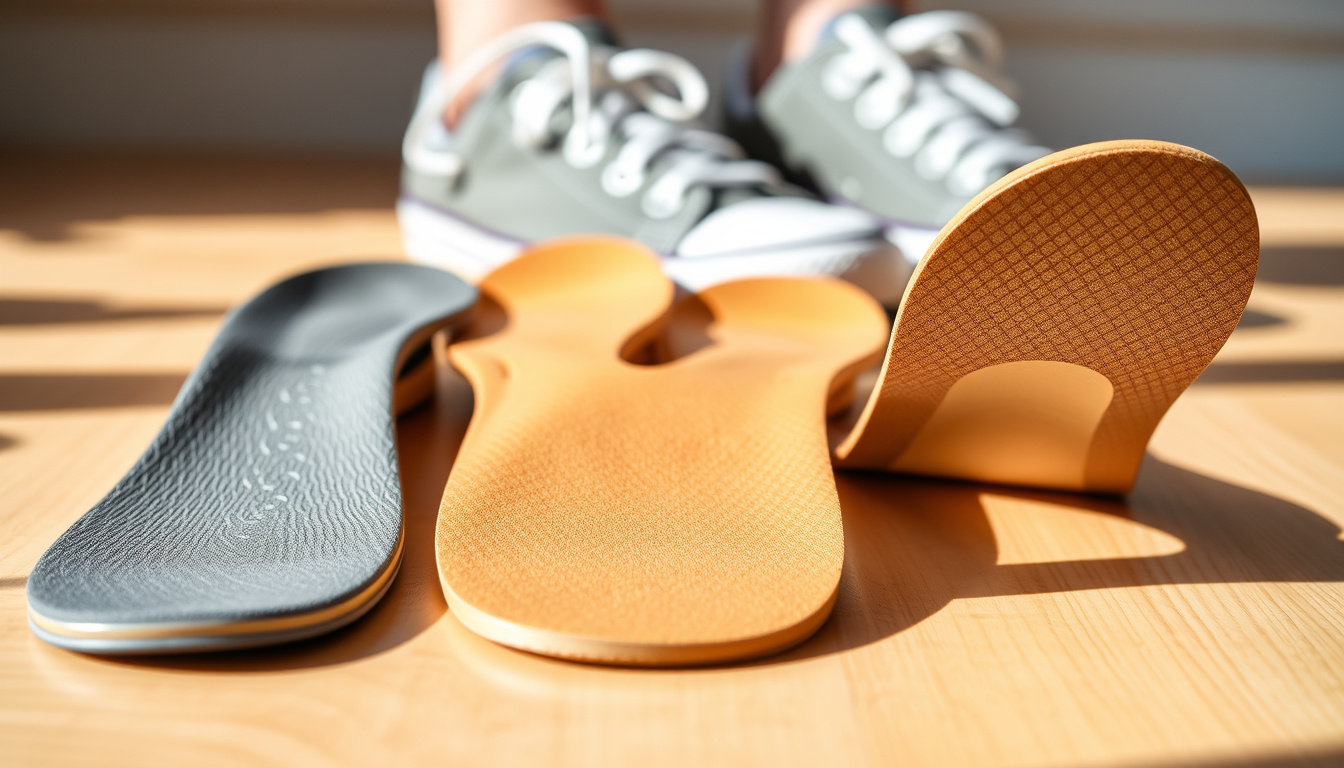
A well-chosen insole can transform how a shoe feels. Whether the goal is filling extra space in a loose boot, relieving the sting of plantar fasciitis, or simply making a long walk more comfortable, the right insert makes a measurable difference. The UK market alone offers everything from five-pound foam pads to two-hundred-pound custom orthotics, and matching the product to the problem is the critical step.
Insoles work by redistributing pressure and supporting the foot’s natural arch. They are not a substitute for medical treatment, but they can alleviate symptoms for many common conditions. Flat feet, plantar fasciitis, arch pain, and even general fatigue from standing all day are all issues that insoles can address. The challenge lies in knowing which type to choose.
According to the American Podiatric Medical Association, over 75% of people experience some form of foot pain in their lifetime. The global insole market is expected to reach £5 billion by 2028, according to Statista, reflecting growing awareness that feet deserve better support than the thin foam that ships inside most shoes.
What Are the Best Shoe Insoles for Your Needs?
Gel, foam, cork, orthotic, custom – each suits different needs.
Insoles can reduce volume and improve fit by up to half a size.
Insoles help with plantar fasciitis, flat feet, and arch pain.
Boots, Superdrug, Amazon, specialist retailers, or NHS prescription.
Key Insights for Choosing Insoles
- Insoles work by redistributing pressure and supporting the foot’s natural arch; they are not a substitute for medical treatment but can alleviate symptoms.
- The majority of over-the-counter insoles last 6–12 months; custom orthotics can last several years with proper care.
- Gel insoles excel at shock absorption; foam insoles offer better customisation after heat moulding.
- Using an insole to fill excess space in a shoe is a common and safe solution, but ensure the shoe’s toe box still provides adequate room.
- Flat feet often benefit from insoles with rigid arch support, while high arches require deep heel cups and cushioning.
Shoe Insoles at a Glance
| Fact | Source |
|---|---|
| Insoles can reduce foot pressure by up to 30% | Journal of Foot and Ankle Research |
| Over 75% of people experience some form of foot pain in their lifetime | American Podiatric Medical Association |
| The global insole market is expected to reach £5 billion by 2028 | Statista |
| NHS guidelines recommend custom orthotics only after specialist assessment | Guy’s and St Thomas’ NHS FT |
| Flat feet need structured arch support, not soft gel alone | OutdoorGearLab |
| Plantar fasciitis responds best to orthotic arch support with cushioning | The Insole Store |
| Foam is generally best for cushioning and pressure relief | The Insole Store |
| Gel provides superior impact attenuation compared to standard foam | Aetrex |
| Custom orthotics offer the most personalised fit but cost more | Aetrex |
| Insoles can improve fit in loose shoes without crowding the toe box | The Insole Store |
How Do I Choose Insoles for Shoes That Are Too Big?
One of the most common searches around insoles has little to do with foot pain and everything to do with fit. When shoes are half a size too large or boots have extra volume around the heel, an insole can take up that space effectively. The key constraint is whether the shoe has room for a thicker insert without compressing the toes.
Will Insoles Make My Shoes Smaller?
Yes, adding insoles reduces the internal volume of the shoe. For most people, a standard insole can effectively reduce fit by about half a size. This is a safe and widely used solution, as long as the toe box remains comfortable and no pressure points develop. If the shoes are already snug, a thin low-profile insole—around 2mm thick—is a better choice.
Best Insoles for Loose Shoes
For loose footwear, the best option depends on how much space needs filling. Thicker foam or cushioned insoles work well in boots and roomy trainers. The guidance from The Insole Store is clear: the insert should improve fit without crowding the toe box or creating pressure points. Low-profile designs are recommended for tighter shoes.
Do Insoles Stop Heel Slipping?
Heel slipping often results from excess volume in the heel cup area. A well-fitted insole, especially one with a deep heel cradle, can lift the foot slightly and reduce movement. Combined with proper lacing, this approach can resolve most slipping issues without needing a different shoe size.
Before buying insoles for loose shoes, remove the original insole and measure its length. Compare that to the new insole. If the shoe’s original insole is removable, the new one should match or be slightly trimable. Many foam insoles can be cut to size with household scissors.
Which Insoles Work Best for Flat Feet and Orthopedic Needs?
Foot structure varies widely, and the insole that helps one person may worsen another’s discomfort. For flat feet and orthopedic conditions like plantar fasciitis, the evidence consistently points toward structured support rather than soft cushioning.
What Insoles Work Best for Flat Feet?
Flat feet typically need structured or semi-rigid arch support. According to OutdoorGearLab and Aetrex, firm support helps control collapse of the arch and reduces inward rolling of the foot. A soft gel insert may feel pleasant initially but does not address the collapsing arch that causes pain and instability in flat feet. Aetrex states that firm, structured support provides stability and helps prevent the foot from rolling inward.
Are Orthopedic Shoe Insoles Effective?
Orthopedic insoles, whether prescribed or bought over the counter, are designed to correct alignment and reduce stress on joints. The Mayo Clinic notes that orthotics can be helpful for many foot conditions but should be chosen based on a proper assessment. For many people, over-the-counter orthotic insoles work just as well as custom ones for conditions like plantar fasciitis, according to the American Academy of Orthopaedic Surgeons.
What Insoles Do Podiatrists Recommend for Plantar Fasciitis?
The strongest recurring recommendation for plantar fasciitis is an orthotic arch support with cushioning. A semi-rigid option is often advised for first-time buyers, while a rigid option suits those wanting more aggressive support. The Sole Active Medium, cited by OutdoorGearLab, combines cushioning with stabilization and a moldable arch to target plantar fasciitis specifically.
Insoles can reduce symptoms of plantar fasciitis, but stretching, strengthening, and proper footwear are often needed alongside them. No single insole is a guaranteed cure. The NHS recommends custom orthotics only after a specialist biomechanical assessment.
Are Gel Insoles the Right Choice for Boots and Everyday Use?
Material choice is one of the most debated aspects of buying insoles. Gel, foam, cork, and leather each have distinct properties, and the right pick depends on the activity and the shoe.
Are Gel Insoles Good for Boots?
Gel insoles are best for shock absorption and a softer feel, making them a popular choice for boots used on hard surfaces. However, as The Insole Store notes, they are less effective for structural support than orthotic-style insoles. For work boots where comfort and impact reduction matter most, gel can be a strong option. For boots that feel loose, a thicker foam layer may improve fit and comfort simultaneously.
Gel vs Foam Insoles – Which Is Better?
Both materials serve different purposes. Gel excels at shock absorption and is ideal for high-impact activities. Foam, particularly heat-moldable varieties, is better for cushioning, pressure relief, and standing comfort. Some foam orthotics can be heat-molded for a more customized fit, a feature gel typically does not offer. Cork provides support with slight cushioning, while leather offers a thinner profile for dress shoes.
Best Insoles for Work Boots
For work boots, the main constraint is fit. If the boot has room, a thicker foam layer may improve comfort during long shifts. If the boot is already snug, a low-profile insole is necessary. The College of Podiatry advises considering the specific activity and shoe fit when choosing an insole.
Adding a thick insole to boots that are already tight can cause pressure points, restrict circulation, and lead to discomfort or blisters. Always check that your toes have adequate room after inserting the insole. If they touch the front, choose a thinner option.
How Long Do Shoe Insoles Last?
The lifespan of an insole depends on its material, frequency of use, and the activity it supports. Over-the-counter insoles generally last between 6 and 12 months. Custom orthotics, with proper care, can last several years. The evolution of insole technology has been steady, and understanding its history helps put modern options in perspective.
- Ancient Egypt – First recorded use of insoles made of papyrus or hay for cushioning.
- 19th Century – Mass production of leather insoles begins.
- 1960s – Introduction of synthetic foams (EVA, PU) revolutionises comfort.
- 1990s – Custom orthotics become widely available via podiatrists.
- 2010s – Gel insoles gain popularity; 3D-printed custom insoles emerge.
- 2025 – Smart insoles with pressure sensors enter consumer market.
Are Custom Insoles Better Than Over-the-Counter Ones?
This is one of the most frequently asked questions about insoles, and the answer is more nuanced than many shoppers expect. Studies cited by the American Academy of Orthopaedic Surgeons indicate that custom orthotics and well-fitted over-the-counter insoles can be equally effective for many conditions. Custom options are more precise but cost significantly more.
| Established Information | Information That Remains Unclear |
|---|---|
| Insoles can reduce foot pressure by up to 30% (Journal of Foot and Ankle Research). | Whether insoles can permanently change foot shape or bone structure. |
| Gel insoles provide superior impact attenuation compared to standard foam. | Whether custom orthotics are always more effective than OTC for all conditions. |
| Flat feet require structured arch support, not soft gel alone. | Whether insoles alone can cure plantar fasciitis without stretching and strengthening. |
| NHS recommends custom orthotics only after specialist assessment. | Whether insoles directly reduce knee or back pain in all patients. |
What Are Orthopedic Shoe Insoles and Who Needs Them?
Orthopedic shoe insoles are inserts designed to support the foot’s natural alignment, reduce abnormal motion, and distribute pressure more evenly. They range from over-the-counter arch supports to custom-moulded devices prescribed by a podiatrist. People with flat feet, high arches, plantar fasciitis, or chronic foot pain are the most common candidates.
In the UK, many insoles are sold as over-the-counter products in pharmacies such as Boots and Superdrug, as well as online through Amazon and specialist retailers. Custom orthotics require a podiatrist and are typically more expensive, with costs ranging from £100 to £300. The NHS only funds custom orthotics after a specialist assessment, and even then availability varies by region.
The Guy’s and St Thomas’ NHS Foundation Trust describes insoles as shoe inserts that change the way your feet work, supporting and cushioning the foot. Consumer confusion is high due to marketing claims, but the underlying principle is simple: the right insole matches the specific biomechanical need of the wearer.
Expert Sources and Key Quotations
“Insoles are shoe inserts that change the way your feet work. There are many types of insoles, but generally they work by supporting and cushioning the foot.”
— Guy’s and St Thomas’ NHS Foundation Trust
“For many people, over-the-counter insoles work just as well as custom ones for conditions like plantar fasciitis.”
— American Academy of Orthopaedic Surgeons
“When choosing an insole, consider the activity you’ll be doing and the specific fit of your shoe.”
— College of Podiatry (UK)
The American Podiatric Medical Association offers additional guidance on selecting the right insole based on activity and foot type.
What to Do Next – Your Action Plan
Choosing the right insole starts with identifying your primary need: fit adjustment, foot condition, or general comfort. Measure your current insole length and shoe size to ensure compatibility. Compare top-rated products from trusted retailers using verified reviews. Try insoles with a return policy—most high-street stores offer a 30-day comfort guarantee. If pain persists, consult a podiatrist for a biomechanical assessment. For those exploring footwear options alongside insoles, the guide to Black Knee High Boots – Your Complete 2025 Style and Fit Guide covers boot-specific fit considerations in detail.
Frequently Asked Questions About Shoe Insoles
Can insoles make shoes too tight?
Yes, adding insoles reduces internal volume. If shoes are already snug, opt for thinner insoles (e.g., 2mm gel) or lace-up adjustment.
How do I clean shoe insoles?
Most can be wiped with a damp cloth and mild soap. Avoid machine washing; air dry away from direct heat.
Are insoles reusable in different shoes?
Yes, but they will conform to the previous shoe’s shape. For best results, dedicate insoles to one pair of shoes.
Do insoles help with back pain?
Indirectly – by improving foot alignment, they can reduce stress on knees and lower back. Evidence is mixed; many patients report relief.
Can I put insoles in sports shoes?
Yes, but ensure the original insole is removable and the new insole doesn’t push your heel too high. Running shoes often accommodate thin insoles.
How much do good insoles cost in the UK?
Basic foam: £5–£10. Gel: £10–£25. Orthotic: £20–£50. Custom podiatrist orthotics: £100–£300.
Can insoles damage my feet?
Poorly fitted insoles can cause pressure points or blisters. Always choose the correct size and type for your foot shape and activity.
Do I need a prescription for orthopedic insoles?
No – many orthopedic-style insoles are available over the counter. Custom orthotics, however, require a podiatrist.
Are Boots insoles any good?
Boots offers a reasonable range of over-the-counter insoles for general comfort and mild support. For specific conditions like flat feet or plantar fasciitis, specialist brands may offer more targeted options.
What insoles do podiatrists recommend for plantar fasciitis?
Podiatrists often recommend orthotic arch support with cushioning, preferably semi-rigid for first-time users and rigid for those needing stronger correction.
For readers also exploring broader health topics, the article on Why Is My Hair Falling Out – Common Causes and Solutions takes a similar evidence-based approach to a common concern.

Jack Thomas Clarke Thompson is a staff writer for PopCultureDaily.co.uk, covering entertainment news, film, television, streaming and celebrity culture. He works under Editor-in-Chief Harriet Winslow and Managing Editor Lucas Bennett, following the newsroom standards for sourcing, verification and fact-checking set out in our editorial policies.