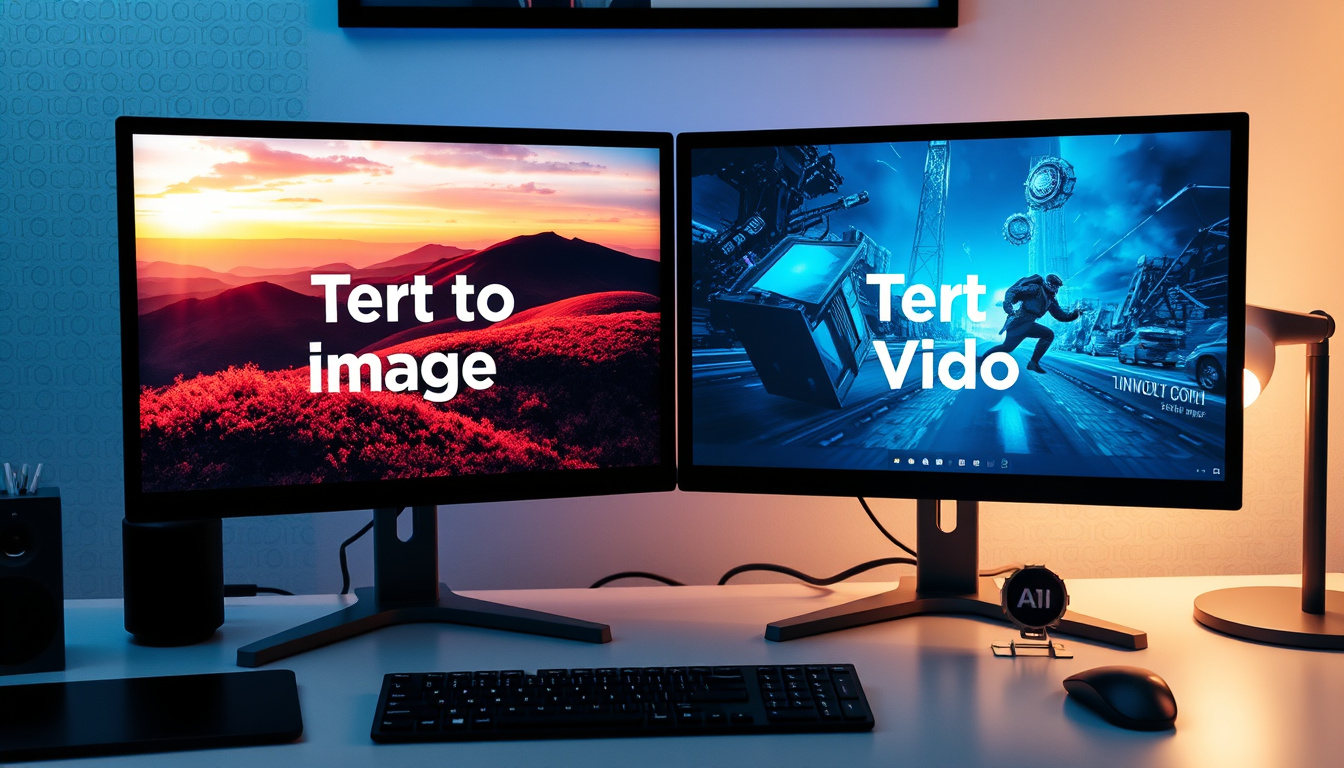
AI image generators have become one of the most accessible creative tools on the internet. What once required expensive software and years of design training can now be achieved with a simple sentence typed into a browser. From photorealistic portraits to abstract art and social media graphics, text-to-image AI tools have transformed how visual content is made.
The market has shifted rapidly. In 2025, dozens of platforms offer free tiers, many requiring no account at all. But the choices come with trade-offs. Image quality, daily limits, commercial rights, and the ability to render text accurately all vary significantly from one tool to the next. Understanding these differences is essential for anyone looking to use AI generators effectively.
This comparison examines the leading free AI image generators available today, what they can and cannot do, and which options best suit different creative needs.
What Is an AI Generator and How Does Generative AI Work?
An AI generator is a software tool that uses machine learning models to create new content — most commonly images, text, or video — based on user inputs. In the case of image generation, the user provides a text prompt, and the model interprets that description to produce a visual output. This process relies on generative AI, a branch of artificial intelligence trained on vast datasets of existing images and their captions.
Best Overall AI Generator
ChatGPT Images (OpenAI) combines strong text understanding with DALL-E 3 integration, offering precise edits and preset filters.
Best Free Unlimited AI Generator
Creen AI provides access to more than 40 models including Sora 2 and VEO 3.1, with no sign-up required for core features.
Best for Designers & Professionals
Pixlr AI Image Generator offers style presets and aspect ratio controls within a familiar design tool interface.
Best for Video & Multimedia
DeepAI and Quillbot provide reliable text-to-image generation, with DeepAI also supporting API-based workflows.
- Most top free AI image generators now require no sign-up, lowering the barrier to entry according to SERP analysis of Creen AI, Pixlr, and DeepAI.
- AI image quality continues to improve, with free versions now offering near-professional results based on industry trends from 2024 to 2025.
- Video generation is rapidly becoming a standard feature in AI generator platforms, as seen in product offerings from Creen AI and OpenAI Sora integration.
- Commercial usage rights vary significantly between free and paid tiers, requiring careful license review across platform terms of service.
- Tools offering unlimited free generation often compromise on image resolution, with outputs typically limited to 512×768 or 1024×1024 pixels.
- Ideogram leads the market for accurate text rendering in AI-generated images, achieving approximately 90 percent accuracy according to multiple comparison sources.
- The trend toward bundling video, audio, and image generation in single platforms is accelerating, with Leonardo.ai being the only free option combining all three.
| Fact | Details |
|---|---|
| Top AI generators in 2025 | ChatGPT Images, Creen AI, Pixlr, DeepAI, Quillbot |
| Free daily generation limits | Typically 10 to 50 generations per day; some platforms offer unlimited use |
| Input method | Most tools require a text prompt; styles range from photorealistic to artistic |
| Video generation available | Creen AI (Sora 2, VEO 3.1) and select other platforms |
| No sign-up required | Creen AI, Pixlr (basic), DeepAI (basic) |
| Best text rendering accuracy | Ideogram achieves roughly 90 percent accuracy for readable text in images |
| Highest free resolution output | Google Gemini offers 4K resolution in its free tier |
| Commercial use permitted | Leonardo.ai, Bing Image Creator, Adobe Firefly, Ideogram, Google Gemini |
| Licensed training data | Adobe Firefly uses licensed data, reducing copyright risk |
| Multi-tool bundling | Leonardo.ai includes image, video, and audio in one free account |
Which Are the Best Free AI Image Generators with No Restrictions?
Several platforms now offer free AI image generation without requiring a user account. These tools prioritize ease of access, but the lack of sign-up often comes with limitations on image quality, resolution, and usage rights.
Perchance: Unlimited Generations, No Watermarks
Perchance provides unlimited image generation directly in the browser with no watermarks. However, the output resolution is limited to 512×768 pixels, and text rendering is poor. Images are restricted to personal use only, according to platform comparisons on FindSkill and Morphed.
Craiyon: Fast and Simple, With Watermarks
Craiyon offers quick generation without sign-up and is useful for casual brainstorming. Image quality is low to medium, outputs carry watermarks, and commercial use is not permitted. Multiple reviews on Reddit and comparison blogs confirm these constraints.
Raphael AI: High Quality Without Sign-Up
Raphael AI uses a Flux-based model to produce full-resolution, stylized images. It is one of the few no-sign-up tools that delivers good image quality, though text rendering remains average and commercial rights are not included.
NoteGPT: High Quality With Unclear Terms
NoteGPT claims unlimited, no-sign-up access and produces high-quality images suitable for marketing and social media. The platform does not clearly specify whether commercial use is permitted, which creates uncertainty for users who need licensed outputs.
No-sign-up tools such as Perchance, Craiyon, and Raphael AI generally restrict images to personal use only. Users who need commercial licenses must create accounts on platforms like Leonardo.ai, Bing Image Creator, or Adobe Firefly, each of which enforces daily or monthly generation limits.
How Do You Use an AI Image Generator from Text?
Using an AI image generator from text is straightforward. The user types a descriptive prompt into an input field, selects optional parameters such as style or aspect ratio, and the model generates one or more images based on the description.
Crafting Effective Prompts
The quality of the output depends heavily on the prompt. Detailed descriptions that specify subject, style, lighting, and composition tend to produce better results. For example, “a photorealistic cat sitting on a wooden table, warm afternoon light, shallow depth of field” yields a more controlled outcome than simply “cat.”
Adjusting Settings for Better Results
Many platforms allow users to select style presets, such as cinematic, anime, or oil painting. Aspect ratio controls are also common, enabling outputs suited for social media posts, banners, or print. Experimenting with these parameters can significantly improve the final image.
Iterating on Outputs
Most tools generate multiple variations of a single prompt. Users can refine their text, adjust settings, or use inpainting features to modify specific areas of an image. Platforms like Pixlr and ChatGPT Images offer editing tools for post-generation adjustments.
For the best results, start with a clear subject and describe the scene in layers: background, main subject, lighting, and mood. Avoid overly complex prompts with conflicting elements, as models can struggle to resolve contradictions. Review the platform’s terms of service on Pixlr and Quillbot before using generated images publicly.
Can AI Generators Also Create Video and Art?
The line between image generation and video creation is blurring. Several platforms now include video generation as a native feature, while others focus exclusively on still images or art-style outputs.
Platforms That Include Video Generation
Creen AI offers access to models like Sora 2 and VEO 3.1, which can generate short video clips from text prompts. Leonardo.ai bundles image, video, and audio generation into a single free account, making it the only platform that combines all three modalities without a paid plan.
Image Generators Versus Art Generators
The difference between an AI image generator and an AI art generator is largely one of branding. Most text-to-image tools can produce both photorealistic and artistic outputs depending on the chosen style. Some platforms, such as DeepAI, emphasize artistic and surreal results, while others focus on practical content like product mockups and social media visuals.
Text Rendering: A Key Differentiator
For users who need readable text in images — such as logos, posters, or banners — Ideogram is the clear leader, achieving approximately 90 percent accuracy according to comparisons on FindSkill and Morphed. Bing Image Creator with DALL-E 3 and Leonardo.ai also handle text well, while Perchance, Craiyon, and Raphael AI perform poorly in this area.
Video generation remains computationally expensive. Free tiers that offer video often impose stricter daily limits than image-only tools. Creen AI, for instance, applies daily quotas to premium video models while keeping core image generation unlimited. Users should verify the specific terms on Creen AI’s terms page before relying on video features for regular content production.
What Are the Limitations of Free AI Generators and Can You Use Them Commercially?
Free AI generators come with a range of limitations that affect both creative output and legal usability. Image resolution, generation speed, feature access, and usage rights all differ between free and paid tiers.
Common Restrictions on Free Tiers
Tools that require no sign-up typically limit output resolution to 512×768 or 1024×1024 pixels. Craiyon applies visible watermarks to all free images. Daily generation caps are common on platforms that offer commercial licenses: Leonardo.ai allows roughly 150 tokens per day, Adobe Firefly caps free users at 25 generations per month, and Ideogram limits output to approximately 10 images per week.
Commercial Use: What the Terms Say
Commercial usage rights vary widely. Platforms like Leonardo.ai, Bing Image Creator, Adobe Firefly, Ideogram, and Google Gemini explicitly permit commercial use in their terms of service. By contrast, Perchance, Craiyon, and Raphael AI restrict outputs to personal use only, according to analyses on Molypix and other comparison sites. NoteGPT does not clearly specify commercial rights, which may pose a risk for business users.
The Practical Trade-Off
The choice is often between unlimited personal-use generation with no sign-up, and limited commercial-use generation that requires an account. Users who need images for profit — whether for marketing materials, products, or published content — should prioritise platforms with clear commercial licensing. The terms can be reviewed directly on each platform: OpenAI’s terms, DeepAI’s terms, and NoteGPT’s image generator page all provide relevant information.
How Have AI Generators Evolved Since 2022?
The timeline of AI image generation shows a rapid acceleration from research projects to mainstream consumer tools.
- 2022: DALL-E 2 and Stable Diffusion launch public access, marking the beginning of widespread AI image generation.
- 2023: ChatGPT integrates DALL-E 3, and Midjourney releases version 5, significantly improving photorealism and prompt adherence.
- 2024: Free unlimited generators emerge, and video generation capabilities become accessible to general users through platforms like Creen AI and Leonardo.ai.
- 2025: Creen AI offers more than 40 models including Sora 2 and VEO 3.1, while Pixlr adds advanced AI features to its design platform. Google Gemini enters the market with 4K output and royalty-free licensing.
What Is Known and What Remains Uncertain About Free AI Generators?
Established Information
- Several free AI image generators exist with no sign-up required, including Perchance, Craiyon, and Raphael AI.
- AI generators can produce high-quality images from text prompts, with some free tools approaching professional standards.
- Commercial use requires checking specific terms of service, and several major platforms explicitly permit it.
Information That Remains Unclear
- The exact daily generation limit for “unlimited” free tiers may change as platforms adjust their business models.
- Long-term availability of free tiers depends on platform sustainability and investor support.
- The copyright and legal landscape for AI-generated content is still evolving, with court cases and regulatory proposals ongoing in multiple jurisdictions.
Why Are Free AI Generators Becoming More Accessible?
AI generators have moved from exclusive paid tools to widely accessible free platforms over a span of just three years. Competition among providers is driving rapid quality improvements and feature expansions. Companies like Creen AI and Perchance use free access as a user acquisition strategy, betting on future monetisation through premium models or subscription tiers.
User adoption is growing accordingly. More people are turning to AI image generators for social media content, marketing materials, and personal projects. This demand has encouraged platforms to invest in better models and broader feature sets. The “no restrictions” trend reflects a deliberate shift toward user acquisition over immediate revenue, a pattern seen in many technology markets during their expansion phase.
According to a comparison published on DataCamp, Google Gemini’s entry into the market with a generous free tier and 4K output has further intensified competition, pushing existing platforms to improve their offerings.
What Do the Platforms Say About Their Own Tools?
“Generate high-quality AI images quickly with ChatGPT Images, featuring precise edits, preset filters and trending prompts.”
— chatgpt.com/images
“DeepAI’s Free Online AI Image Generator gives you the power to visualize your imagination in seconds.”
— deepai.org
“Turn any text prompt into AI images instantly for free. Our AI image generator creates photo-realistic art, social media visuals, no design skills needed.”
— quillbot.com
What Should You Take Away from This Comparison?
The best free AI image generator depends entirely on the user’s priorities. For unlimited, no-sign-up access with no commercial requirements, Perchance offers the lowest friction. For high-quality outputs with commercial rights, Leonardo.ai and Bing Image Creator provide the most generous free tiers. Users who need accurate text in images should turn to Ideogram, while those seeking 4K resolution can use Google Gemini. Checking the terms of service on each platform remains essential, especially for commercial projects. Readers interested in the broader context of visual creativity may also find the article on Salvador Dali – Life Paintings Museums relevant, and those building a creative workflow might benefit from the Best Standing Desk UK 2025 – Expert Guide, Electric vs Manual.
Frequently Asked Questions
What is an AI model generator?
An AI model generator is a tool that uses pre-trained machine learning models to generate content, such as images, text, or video, based on user inputs.
What is an AI vector generator?
An AI vector generator creates scalable vector graphics (SVG, EPS) from text prompts, useful for logos, icons, and illustrations.
What is an AI question generator?
An AI question generator creates quiz questions, FAQs, or interview questions from provided text or topics, often used in education and content creation.
How do AI generators compare to traditional graphic design tools?
AI generators are faster and require no design skills but may offer less precise control compared to tools like Adobe Photoshop or Illustrator.
Which AI generators offer the highest resolution for free?
Google Gemini provides 4K output in its free tier. Ideogram offers 2048×2048 resolution, while most no-sign-up tools cap at 512×768 or 1024×1024 pixels.
Do any free AI generators support batch generation?
Perchance allows unlimited batch generation without watermarks. Leonardo.ai offers batch generation within its daily token limit.
Can AI generators edit existing images?
Some platforms, such as ChatGPT Images and Pixlr, offer inpainting or editing features that allow modifications to specific areas of an uploaded image.
Are AI-generated images copyrighted?
Copyright for AI-generated images remains legally uncertain in many jurisdictions. Users should consult the terms of service of each platform for specific guidance.
What internet connection is needed to use AI image generators?
Most AI image generators run on cloud servers, requiring a stable internet connection. Generation times vary from a few seconds to over a minute depending on the model and server load.
Is there a risk of biased or harmful outputs?
Yes, AI models can reflect biases present in their training data. Most platforms implement content filters, but users should review outputs carefully and report problematic generations.

Jack Thomas Clarke Thompson is a staff writer for PopCultureDaily.co.uk, covering entertainment news, film, television, streaming and celebrity culture. He works under Editor-in-Chief Harriet Winslow and Managing Editor Lucas Bennett, following the newsroom standards for sourcing, verification and fact-checking set out in our editorial policies.